Automation Strategy
When Not to Automate: Five Operations Where Robotics Is the Wrong Answer
Oct 3, 2026 · 15 min read · Robotech Pros
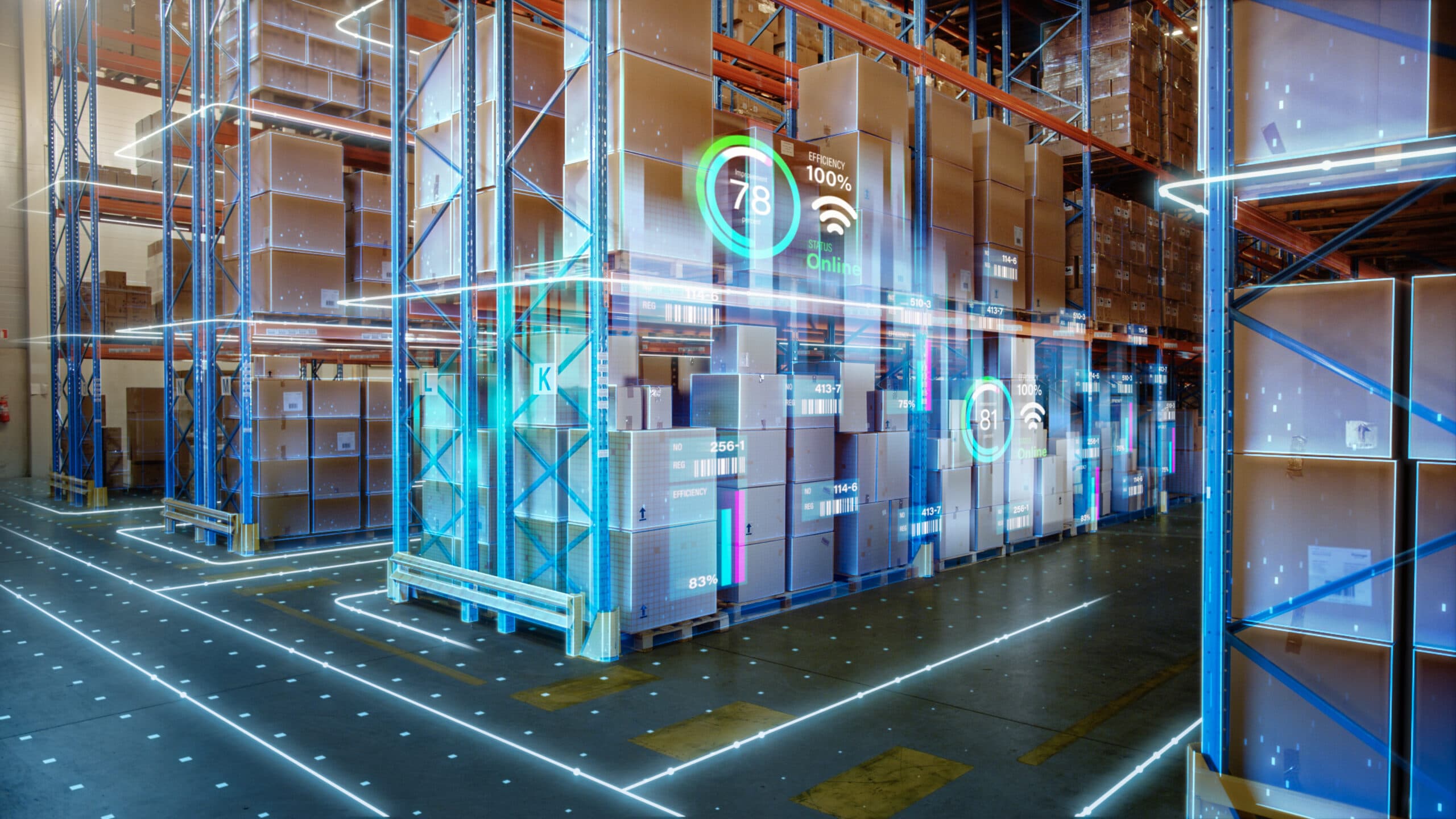
Most automation content explains when to start. This one explains when to stop: five operating profiles where mobile robotics disappoints, with a measurement you can run before anyone quotes a fleet.
When Not to Automate: Five Operations Where Robotics Is the Wrong Answer
Most robotics content answers one question: how soon can you start. This article answers a less popular one. There are operations where mobile robotics will not pay back, will not raise throughput, and will leave the facility harder to run than it was before.
Publishing that list is an odd move for a company that deploys robots, and we know how it reads. A project that disqualifies itself during assessment costs a conversation. One that disqualifies itself at month eighteen costs a capital budget, an operations team's confidence, and usually the next three years of automation funding.
The failure rate is not hypothetical. In the 2026 Intralogistics Robotics Survey, 74 percent of respondents said robotics met their business goals. Of the 21 percent who said it fell short, the misses clustered on return on investment, system reliability and integration cost rather than on robot performance. The machines mostly worked. The business case did not.
Where automation goes wrong, and why it is rarely the technology
Robotics underperforms when it is applied to an operation whose binding constraint is something other than movement. Mobile robots convert travel into throughput. Where travel is not what limits the operation, there is nothing to convert, and the business case rests on savings that were never there.
Each profile below has a plausible surface case: a visible labor line, a real volume, a bottleneck everyone can point at. What each lacks is the specific condition that makes mobile robotics economic. A repeatable movement task, performed often enough, across enough distance, in a facility still configured this way when the payback arrives.
Table 1: The five operations and the symptom that identifies each
| Operating profile | Why robotics underperforms | The telling symptom |
|---|---|---|
| Short travel, dense pick faces | Travel is already a small share of pick time, so removing it releases little labor | Pickers are rarely more than a few steps from the next location |
| Permanent exception stream | The exception lane still needs staffing, capping the labor saving far below the automation rate | A standing manual station handles what nothing else will touch |
| Facility horizon shorter than project horizon | Lease, relocation or redesign plans expire before the payback period closes | Nobody can say with confidence where the operation sits in four years |
| Data is the real constraint | Robots execute instructions faithfully, including wrong ones, and remove the human judgment that absorbed the errors | Pickers routinely correct the system rather than follow it |
| Volume that exists for eight weeks a year | A fleet sized for peak idles most of the year while its cost stays fixed | Peak headcount is a multiple of baseline headcount |
Each profile has a legitimate operational problem. In each case, robotics is not the instrument that solves it.
Operation one: Short travel distances and dense pick faces
The figure underwriting nearly every mobile robotics business case is this one. In conventional person-to-goods picking, travel accounts for roughly half of order picking time, with search at about 20 percent, extraction at 15 percent and setup at 10 percent. Take out the walking and the arithmetic is compelling.
It is an average across conventional layouts, though, not a property of warehouses. Compact operations invert it. A facility with a tight pick face, high SKU density and short order profiles may spend most of its pick time searching and handling, with travel under a quarter. Robots attack the smallest line on the list. A goods-to-person model compresses search as well, which is a different calculation carrying a heavier capital commitment.
Table 2: The travel share test
| Pick time component | Conventional share | How to measure it | What a low figure means |
|---|---|---|---|
| Travel between locations | About 50 percent | Time from the end of one extraction to the start of the next, over a full shift | Below roughly 25 percent, the saving a mobile robot offers is largely absent |
| Searching for the item | About 20 percent | Time from arrival at the location to hand on product | A high figure points at slotting and location accuracy, not transport |
| Extracting and handling | About 15 percent | Time from hand on product to item in tote | A high figure points at pick face ergonomics and case sizes |
| Setup and administration | About 10 percent | Time at the start and end of each batch or wave | A high figure points at order release and batching rules |
Conventional shares describe person-to-goods picking in typical layouts. Your facility is the only relevant data set.
No published threshold exists below which mobile robotics stops paying, and anyone quoting one has invented it. What exists is arithmetic you can do yourself. Multiply your travel share by your annual picking labor cost. That product is the ceiling on what a fleet can return here, before derating for congestion, charging and availability. If the ceiling does not clear the capital cost, the conversation is over, and it is cheaper to end it now.
Operation two: A product mix that generates a permanent exception stream
Automated handling has improved faster than its reputation. Independent 2026 analysis of robot capability found warehouse picking to be one of the clearest industrial successes in autonomy, with leading systems reliably handling varied objects, including deformable packaging considered out of reach a few years ago. The same analysis names the limit precisely. Transfer is rarely demonstrated, so a system performs at its headline reliability on the object population it was tuned against.
For an operation with a genuinely unruly mix, what follows is arithmetic rather than engineering. Suppose a system handles 92 percent of your volume. The remaining 8 percent does not disappear. It arrives through the same doors, on the same trailers, during the same peak hours, and it needs a staffed lane. That lane is sized for peak exception volume, not average, so it rarely comes out at 8 percent of the original headcount.
Your product mix sets the exception rate, not the vendor demonstration. Pull a month of receipts and sort them by what makes each item awkward: unlabeled, deformable, oversized, unstable, co-mingled. If the awkward share is large and structural, attack the mix. Packaging standards and vendor compliance are unglamorous, and they move the automation case more than any robot selection will.
Operation three: A facility horizon shorter than the project horizon
Automation takes longer to start earning than most plans assume. In the same 2026 survey, 47 percent expected more than two years from conception to operation, and among systems already running, 48 percent took seven to twelve months from inception to go-live. The payback clock starts after all of that, not at approval.
Set that against the building. US warehouse stock is old, averaging 43 years, with roughly 28 percent of space in buildings over 50 years old according to CBRE. Older facilities are the ones most likely to be relocated out of or outgrown mid-project, and they carry physical limits that narrow the options before any vendor is involved. There is no credible public figure for the average industrial lease term, so we will not invent one. The number that matters is in your lease.
Table 3: Facility horizon against project horizon
| Question to answer | Where the answer lives | What disqualifies the project |
|---|---|---|
| Years remaining on the lease, including options you will exercise | The lease and the real estate plan, not operations | Remaining term shorter than deployment plus payback |
| Is a relocation or consolidation under discussion | Network strategy and finance | Any active plan to move or consolidate this site |
| Is the racking layout settled | Current layout against planned SKU and volume growth | A reconfiguration expected inside the payback window |
| Will the building support the system as it stands | Floor flatness, clear height, aisle widths, power capacity | Required work the landlord will not fund or permit |
| Does the system move with you | Vendor terms on relocation, recommissioning and remapping | A system that cannot be redeployed and holds no residual value |
A yes to any disqualifier rarely means never. It usually means the right decision point is the next facility.
Operation four: An operation whose real constraint is data
Inventory record accuracy is the prerequisite nobody budgets for. The reference study on the subject examined close to 370,000 records across 37 retail stores and found 65 percent of them inaccurate. Warehouse figures are better and vary enormously by maturity. Benchmarking that separates classes of operation puts record inaccuracy near 10 percent at the weakest end and around a tenth of one percent at best in class.
Here is why that matters more under automation than without it. A picker sent to an empty location does something sensible. They check the next slot, flag the discrepancy, or ask a supervisor. That improvisation is invisible labor, and it has absorbed your data errors for years. A robot sent to the same location completes its task, reports success and moves on. The error propagates into a short shipment instead of being caught at the pick face.
Automating an operation with weak inventory data does not expose the data problem gently. It converts a recoverable floor-level issue into a customer-facing one, at machine speed. The test is cheap: run blind counts on a representative sample of locations. If accuracy sits below the mid-nineties, fix that first. It costs a fraction of a fleet and improves the operation whether or not automation ever happens.
Operation five: Volume that only exists for eight weeks a year
Seasonal operations make the most intuitive case for robotics and the weakest financial one. Labor flexes. Capital does not. US retailers added roughly 461,500 seasonal positions in the fourth quarter of 2025, and transportation and warehousing added about 266,500, according to Challenger, Gray and Christmas. Both figures were the lowest in years, which the firm attributes partly to employers leaning on automation and on-demand labor pools. The structure of the decision has not changed, though. Seasonal headcount scales down in January. A fleet does not.
A fleet sized for peak is idle through the trough, and one sized for the trough does not help at peak, which was the reason for buying it. The question is not whether robots could handle your December. It is what the same capital does for you in March. Automation earns its place here when baseline volume alone justifies it and peak is handled by labor on top.
What to do instead, and when the answer changes
None of this argues against automation. It argues against automating the wrong constraint, a different and far more expensive mistake. Each profile has a lower-cost intervention that addresses the actual problem, and a condition that would legitimately reopen the question. Four of the five triggers below are measurements rather than purchases, so your own team can produce them before a vendor is involved.
Table 4: Lower-cost interventions and the trigger to revisit automation
| Operating profile | Address this first | Revisit automation when |
|---|---|---|
| Short travel, dense pick faces | Slotting by velocity, batch and cluster picking, pick path review | Volume growth forces a layout expansion that lengthens travel |
| Permanent exception stream | Packaging standards, vendor compliance, receiving specifications | The exception share falls below the level that justifies a dedicated lane |
| Short facility horizon | Redeployable equipment, labor management systems | The next facility is confirmed and automation is designed into it |
| Data constraint | Blind count audits, cycle counting program, location discipline | Record accuracy holds above the mid-nineties for two consecutive quarters |
| Seasonal volume | Seasonal labor planning, overflow space, flexible capacity agreements | Baseline volume alone clears the payback without the peak |
Every intervention in the middle column improves the operation on its own, which is what makes it a safer first move than a fleet.
How we approach this at Robotech Pros
Our assessment work starts with the constraint rather than the catalog. That means measuring travel share, exception rates, record accuracy and demand profile before discussing robot classes, because those four numbers decide whether there is a project here and what size it should be. Sometimes the honest answer is that there is not one yet.
Where the numbers do support automation, a bounded proof-of-concept is how the remaining risk gets priced: a defined scope, a success threshold agreed in advance, a real decision point at the end. For older buildings, a brownfield retrofit approach keeps the scope on what the structure can support. If you are evaluating automation now, the most useful next step is not a quote. It is a workflow assessment that tests whether movement is genuinely your constraint, including the version of that conversation ending in a recommendation to wait.
Related resources
How Many AMRs Do You Actually Need? A Guide to Throughput Modeling
Most AMR fleet sizes are guessed before anyone counts the moves. This guide walks through the four-step throughput model that replaces the guess, and explains why doubling throughput takes more than double the robots.
Robot Charging Infrastructure: Battery Strategy, Opportunity Charging, and Floor Space Planning
Charging is usually treated as an electrical question and handed to an electrician. The harder question is how much productive floor space the dock bank consumes, and how much of the fleet sits parked when throughput pea
How Racking, Aisle Widths, and Mezzanines Limit Your Automation Options
Most automation shortlists are decided by the building, not the vendor. A practical look at how rack configuration, clear aisle width, and mezzanine design rule options in or out, and what to measure before you invite an