Mobile Robotics
5 Signs Your Warehouse Is Ready for Mobile Robotics
Dec 29, 2025 · 14 min read · Robotech Pros

Is your warehouse ready for mobile robotics, or just interested? These five operational signs reveal whether automation can actually solve a real movement problem in your facility right now.
Interest Is Not the Same as Readiness
A lot of warehouses are interested in robotics right now. That part is easy to understand. Labor remains tight, order expectations keep rising, and many operations are still using too much time and effort to move goods from one point to another.
But interest in automation is not the same as being ready for it.
Some warehouses are in a strong position to benefit from mobile robotics quickly. Others may still need better process clarity, a clearer first use case, or a better understanding of where movement is actually creating friction. The difference matters. When robotics is matched to the right operational problem, it can improve flow, reduce wasted labor, and create a practical path toward broader automation. When it is introduced too early or for the wrong reason, it can become an expensive distraction.
That is why readiness matters more than excitement.
This article is built around a simple question: Is your warehouse actually ready for mobile robotics? In most cases, the answer becomes clear when you look at how work moves through the building today.
Sign #1: Too Much Time Is Spent Moving Things Around
This is usually the clearest sign.
If too much labor is being consumed by walking, transporting items, staging inventory, or moving materials between zones, your warehouse may be a strong candidate for mobile robotics.
In many operations, movement is one of the biggest hidden drains on productivity. Workers stay busy, but a large share of their day is spent on travel rather than value-added work. Pickers walk back and forth between locations. Replenishment teams lose time moving products from reserve storage to forward pick areas. Supervisors step in to solve flow problems manually because the operation depends too heavily on people physically moving things around.
DHL has noted that in some warehouses, human pickers can spend up to 75% of their time walking. That is a useful benchmark because it shows just how much labor can be tied up in movement rather than picking, checking, packing, or other tasks that matter more directly to output and service.
This is exactly where mobile robotics often creates value first. When robots take over repetitive transport, people can spend more time on the work that actually requires judgment, accuracy, or speed.
| What You See | What It Usually Means |
|---|---|
| Pickers walk long distances | Labor is being used inefficiently |
| Replenishment is delayed by transport | Internal movement is a bottleneck |
| Supervisors rely on manual workarounds | Flow depends too heavily on labor availability |
A warehouse does not need to be fully overwhelmed for this sign to matter. If movement is consuming labor without adding much value, mobile robotics may already be worth evaluating.
Sign #2: Your Layout or Workflow Changes Often
Some warehouses operate in a highly fixed environment. Others do not.
If your pick zones change, storage priorities shift, staging areas move, or traffic patterns vary throughout the day, flexibility becomes important. In these conditions, mobile robotics often has an advantage because it can support changing workflows more easily than fixed automation.
This is one of the biggest reasons AMRs have gained traction. Rockwell Automation describes AMRs as intelligent vehicles that can make real-time decisions in dynamic environments, unlike AGVs that follow fixed paths guided by tape or markers. Rockwell also notes that this self-navigation makes AMRs more flexible in warehousing and manufacturing settings where conditions change over time.
That distinction matters in practice. If a warehouse is still evolving, adding fixed infrastructure too early can create limitations later. Mobile robotics can be a better fit when the operation wants automation, but also needs room to adapt.
This sign is especially relevant for:
- Growing warehouses
- Operations with seasonal reconfiguration
- Facilities with mixed human and machine traffic
- Sites that want to automate in phases
If your operation changes often, flexibility is not just a nice feature. It is part of the business case.
Sign #3: Labor Problems Are Now Affecting Throughput
There is a big difference between a hiring challenge and an operational problem.
A warehouse becomes more clearly ready for robotics when labor pressure starts affecting throughput, consistency, or service levels. That usually shows up in visible ways: orders fall behind, replenishment is late, travel time limits picking performance, or managers depend too much on overtime and temporary labor to keep things moving.
At that point, labor is no longer just an HR issue. It is directly shaping how the warehouse performs.
This is where robotics becomes much more than a technology upgrade. It becomes a way to reduce dependence on hard-to-fill repetitive roles and create a more stable operating base. The International Federation of Robotics has linked increased use of AI-equipped robots in logistics to labor shortages among warehousing staff, dockworkers, and transport roles. That supports a wider point: more companies are using robotics not because automation sounds modern, but because labor constraints are becoming too disruptive to ignore.
If labor shortages are already affecting how much your warehouse can process, how quickly it can ship, or how reliably it can run, that is a strong signal that the operation may be ready for mobile robotics.
Sign #4: Your Processes Are Structured Enough to Automate
A warehouse does not need perfect processes to adopt robotics. But it does need enough structure to identify where robots can help.
This is an important point because some companies assume they must solve every operational issue before automation is realistic. That is not true. But the warehouse should at least be able to answer a few basic questions clearly:
- Which tasks repeat every day?
- Where is movement creating the most delay?
- Which routes or transfers are predictable enough to automate?
- What would a good first use case look like?
If the answers are vague, the operation may not be ready yet. If the pain points are clear, readiness is much stronger.
McKinsey’s work on warehouse automation consistently reinforces the importance of matching the automation approach to the right use case and process design. In other words, success usually comes from clarity, not from automation ambition alone.
Good signs of process readiness include:
- Repeatable workflows
- Defined movement tasks
- Visible transport bottlenecks
- Enough process consistency to support a pilot
A simple way to think about it is this: if your warehouse can clearly see where movement is wasting time, robotics becomes much easier to justify and deploy.
Sign #5: You Want to Start Small and Scale Gradually
Many warehouses are ready for mobile robotics for one simple reason: they do not want a full automation overhaul. They want a focused first step.
That mindset is often a good sign.
One of the practical advantages of mobile robotics is that it can often be introduced in phases. A warehouse can start with one movement problem, prove value, learn what integration is needed, and then expand from there.
That makes mobile robotics attractive for operators who want to reduce risk while still moving forward. It also helps companies avoid the all-or-nothing mindset that can delay automation decisions.
This approach tends to work well when the warehouse has:
- One clear first use case
- Pressure to improve flow quickly
- A need to avoid major infrastructure changes
- Interest in scaling only after the first deployment proves value
| Readiness Signal | Why It Matters |
|---|---|
| Clear first use case | Easier to justify and measure |
| Need to scale gradually | Mobile robotics supports phased rollout |
| Desire to avoid large infrastructure changes | AMRs are more flexible |
| Pressure to improve flow quickly | Robots can target movement bottlenecks first |
If your warehouse wants progress without committing to a full redesign, that is often a strong sign that mobile robotics fits the business well.
One Sign You May Not Be Ready Yet
Not every warehouse should move forward with robotics immediately.
A common sign that a warehouse may not be ready is this: there is no clear first use case. If the team cannot explain where movement is causing the most friction, which task should be automated first, or how success would be measured, the operation may need more assessment before it needs robots.
The same is true when workflows are highly inconsistent or constantly improvised in ways the business does not yet understand. In these situations, the better next step may be to map the process more clearly first.
Readiness is not about how interested the business is in automation. It is about whether the technology can be tied to a specific operational problem.
How Robotech Pros Can Help
This is where a company like Robotech Pros can make the next step clearer.
The current Robotech Pros website positions the company around mobile robotics for industries and manufacturers, supported by custom integration, software, maintenance, training, and strategic support. That makes the company a good fit for warehouses that want to assess readiness carefully before moving into deployment.
Robotech Pros can help warehouses:
- Assess where movement is creating the most pressure
- Identify the best first workflow for mobile robotics
- Integrate robotics into real operating environments
- Support adoption with training, software support, and ongoing service
- Build a phased strategy that can grow over time
Conclusion
A warehouse is usually ready for mobile robotics when the operational signals are already visible.
Too much labor is spent on movement. Layouts or workflows change often. Labor pressure is affecting throughput. Processes are structured enough to support automation. And the business wants to start with a focused first step rather than a full overhaul.
Those are not abstract technology signals. They are practical signs that mobile robotics may be able to solve a real problem.
If your warehouse is seeing these signs, Robotech Pros can help you assess whether mobile robotics is the right next step for your operation.
Related resources
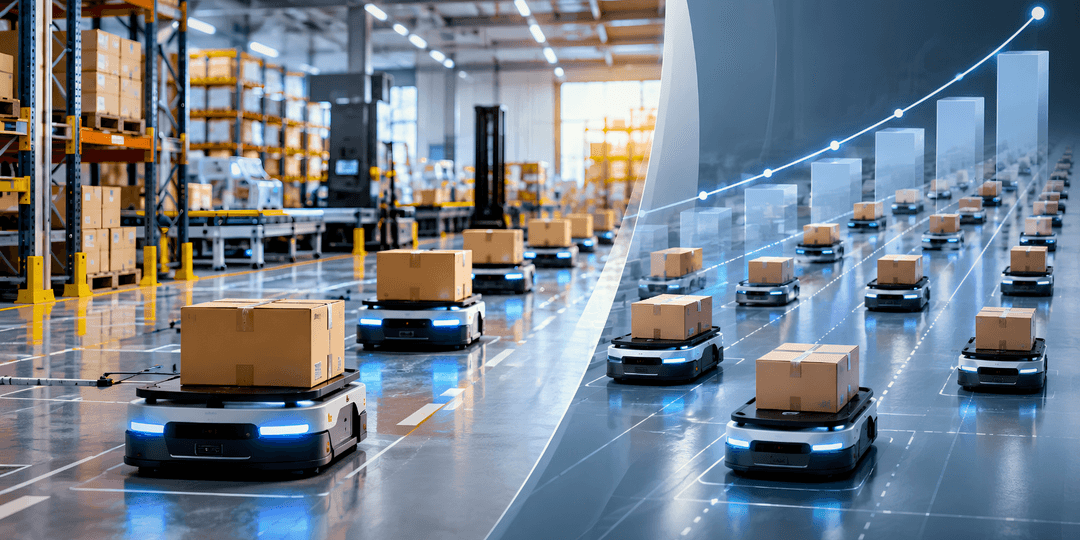
How Many AMRs Do You Actually Need? A Guide to Throughput Modeling
Most AMR fleet sizes are guessed before anyone counts the moves. This guide walks through the four-step throughput model that replaces the guess, and explains why doubling throughput takes more than double the robots.
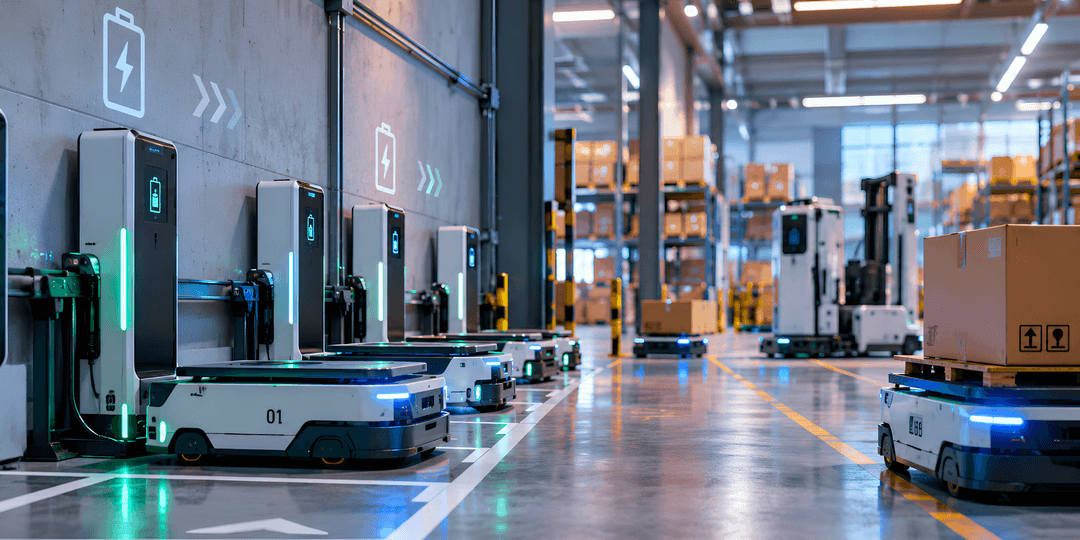
Robot Charging Infrastructure: Battery Strategy, Opportunity Charging, and Floor Space Planning
Charging is usually treated as an electrical question and handed to an electrician. The harder question is how much productive floor space the dock bank consumes, and how much of the fleet sits parked when throughput pea
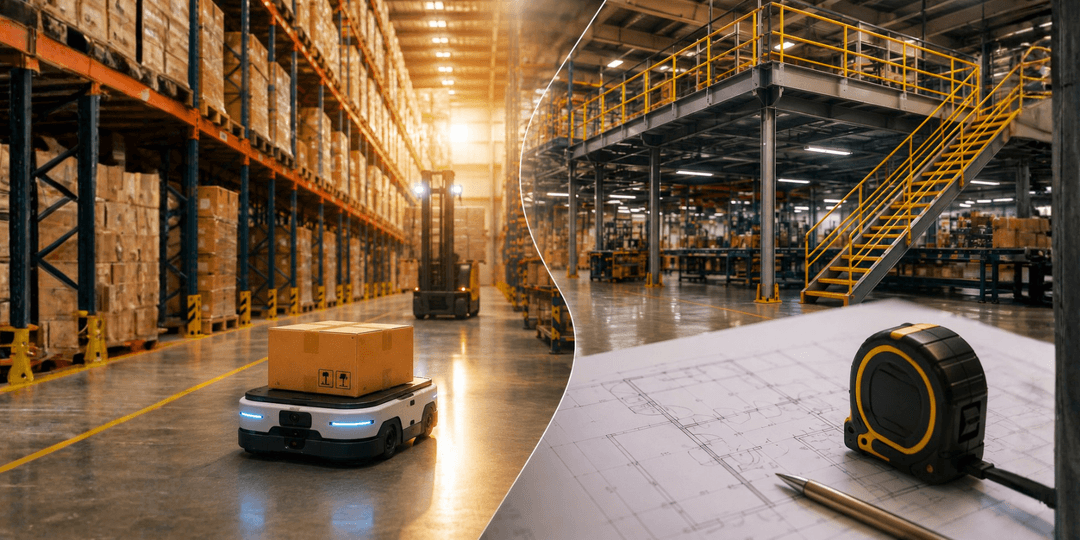
How Racking, Aisle Widths, and Mezzanines Limit Your Automation Options
Most automation shortlists are decided by the building, not the vendor. A practical look at how rack configuration, clear aisle width, and mezzanine design rule options in or out, and what to measure before you invite an