Automation Strategy
How to Calculate Warehouse Automation ROI Before Investing in Robotics
May 11, 2026 · 18 min read · Robotech Pros
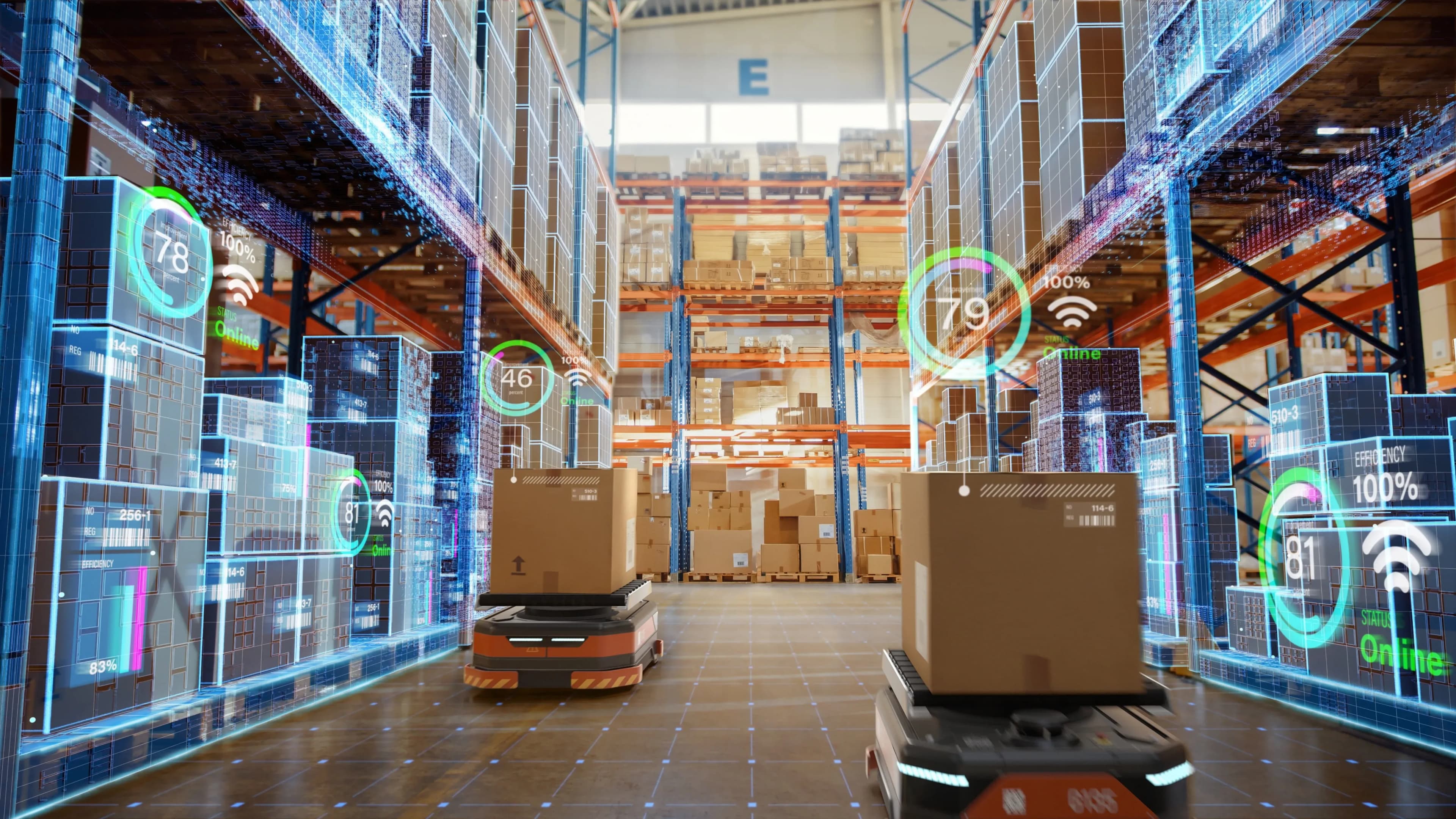
Learn how to calculate warehouse automation ROI before investing in robotics, from labor savings and throughput gains to long-term operational value.
Why ROI Should Come Before the Robot
Warehouse automation is no longer a distant idea for large enterprise facilities only. Many warehouses, manufacturers, and logistics operators are now evaluating robotics because labor is harder to secure, order expectations are rising, and manual material movement is becoming increasingly expensive to manage.
But before choosing an Autonomous Mobile Robot, conveyor system, robotic picking solution, or automated storage technology, companies need to answer a more practical question: Will this automation investment create measurable value for the operation? That is where warehouse automation ROI becomes important.
Return on investment is often treated as a simple financial calculation. In warehouse robotics, it should be more than that. A useful ROI model should show how automation affects labor productivity, throughput, accuracy, safety, space utilization, service reliability, and the ability to scale without simply adding more headcount.
At Robotech Pros, this is where many automation conversations should begin. The goal is not to install robotics because the technology is impressive. The goal is to identify where automation can remove operational friction and create a stronger, more predictable workflow.
What Warehouse Automation ROI Really Means
Warehouse automation ROI measures whether the operational and financial benefits of automation justify the cost of investment.
In simple terms, ROI compares what a business gains from robotics against what it spends to implement and operate the system.
A basic formula looks like this:
ROI = (Annual Benefits - Annual Costs) / Total Investment x 100
Another common metric is payback period:
Payback Period = Total Investment / Net Annual Savings
If a robotics project costs $250,000 and generates $125,000 in annual savings, the payback period is roughly two years.
But warehouse automation ROI should not be treated as a simple labor-reduction equation alone. The real value often comes from improving how work moves across receiving, storage, picking, replenishment, packing, and shipping.
That is why companies should start with the workflow, not the robot itself. Before evaluating AMRs, robotic picking systems, or other automation technologies, warehouse teams should first identify where operational friction is limiting performance.
Typical examples include:
| Operational Problem | Possible Automation Fit | Primary ROI Driver |
|---|---|---|
| Pickers spend too much time walking | AMRs or goods-to-person workflow | Labor productivity |
| Materials move manually between zones | Mobile robots or AGVs | Transport efficiency |
| Replenishment delays slow picking | AMR-assisted replenishment | Throughput stability |
| High picking or packing error rates | Vision systems or automated verification | Error reduction |
| Peak demand depends heavily on temp labor | Scalable robotics deployment | Operational resilience |
A useful ROI model connects automation directly to a measurable operational constraint.
Establish Your Current Baseline
The first step in calculating warehouse automation ROI is understanding the current cost of doing the work manually.
This baseline should be specific. General statements such as “our warehouse is inefficient” are not enough. The team needs measurable information about how the process performs today. Useful baseline metrics include:
- Labor hours spent on the target workflow
- Average wage and burdened labor cost
- Picks, moves, orders, pallets, or units processed per hour
- Travel distance or walking time
- Error rate
- Rework time
- Overtime cost
- Temporary labor cost
- Safety incidents linked to repetitive movement or handling
- Equipment utilization
- Space used for staging or storage
For AMR projects, travel time is often one of the most important baseline metrics. If workers spend a large part of their day walking, pushing carts, or transporting materials, the operation may have a strong case for mobile robotics.
For picking or packing automation, error rates and cost per order may matter more. For manufacturing support workflows, the key metric may be how often operators leave production areas to retrieve parts, materials, or tools.
The goal is to convert operational friction into measurable cost.
The Core Drivers of Warehouse Automation ROI
Once the current workflow baseline is clear, the next step is identifying where automation can create measurable operational improvement.
In most warehouse environments, robotics ROI usually comes from four main areas: labor productivity, throughput improvement, error reduction, and safety.
| ROI Driver | Operational Impact | Business Value |
|---|---|---|
| Labor productivity | Reduces repetitive transport and walking | Better use of labor hours |
| Throughput improvement | Improves flow between workflows | More output without proportional labor growth |
| Error reduction | Improves consistency and accuracy | Lower rework and service cost |
| Safety and ergonomics | Reduces repetitive physical strain | More stable operations and lower disruption |
Labor Productivity
Labor is often the clearest ROI category, especially in workflows involving repetitive movement.
Automation may reduce walking, manual transport, staging, or repetitive handling, allowing workers to focus more on picking, quality checks, packing, or workflow supervision. A basic estimate looks like this:
Annual Labor Savings = Labor Hours Reduced x Burdened Hourly Labor Cost
For example, if automation reduces repetitive transport work by 40 labor hours per week at a burdened labor cost of $28 per hour:
40 hours x $28 x 52 weeks = $58,240 annual labor savings
Throughput Improvement
Many warehouses invest in robotics not to eliminate labor, but to process more volume without scaling headcount at the same rate.
Automation can improve:
- Order cycle time
- Workstation utilization
- Pick rates
- Replenishment flow
- Movement consistency between zones
For growing operations, throughput gains may become more valuable than direct labor reduction.
Error Reduction
Picking, packing, and inventory errors create hidden costs through rework, replacement shipping, inventory correction, and customer service time.
Automation can reduce these costs by improving process consistency and verification.
A simple estimate:
Annual Error Cost = Number of Errors x Average Cost per Error
Even small reductions can become meaningful in high-volume fulfillment operations.
Safety and Ergonomics
Robotics can also improve warehouse safety by reducing repetitive lifting, long-distance walking, and physically demanding transport tasks.
The financial impact may include:
- Fewer disruptions from injury
- Lower ergonomic strain
- More stable staffing
- Improved retention
- Reduced overtime fatigue
These benefits are harder to quantify precisely, but they still influence long-term operational performance.
Calculate Total Cost of Ownership
A weak ROI model only looks at the purchase price of equipment.
A strong model includes total cost of ownership.
For warehouse robotics, costs may include:
- Robot hardware
- Software licensing
- Fleet management platform
- Integration with WMS, ERP, or warehouse control systems
- Installation and commissioning
- Facility preparation
- Network or connectivity upgrades
- Employee training
- Maintenance and service
- Spare parts
- Support contracts
- Process redesign
- Internal project management time
This is where many automation business cases become too optimistic. The robot itself is only one part of the investment.
| Cost Category | Examples |
|---|---|
| Hardware | Robots, charging stations, sensors, carts, attachments |
| Software | Fleet management, analytics, orchestration, licenses |
| Integration | WMS connection, task logic, API work, interface design |
| Facility readiness | Wi-Fi, floor conditions, traffic zones, signage, charging areas |
| Training | Operators, supervisors, maintenance teams |
| Support | Preventive maintenance, troubleshooting, updates |
Robotics ROI becomes more credible when these costs are visible from the beginning.
Compare Payback Period, ROI, and Strategic Value
Payback period is important because it shows how quickly the investment returns its cost. A shorter payback period is attractive, but it should not be the only decision factor. Some automation projects have longer payback but stronger strategic value. For example, a more capable mobile robotics system may take longer to pay back than a smaller fixed solution, but it may support future workflows, growth, and redeployment across different areas of the facility.
Companies should usually compare three views:
| Evaluation Method | What It Shows | Limitation |
|---|---|---|
| Payback period | How long until the investment recovers its cost | Does not show long-term value |
| ROI percentage | Financial return relative to investment | Depends heavily on assumptions |
| Strategic value | Flexibility, scalability, resilience, future readiness | Harder to quantify |
A balanced business case includes all three.
The best robotics investment is not always the cheapest system or the one with the fastest payback. It is the one that solves a real operational constraint and continues to create value as the business changes.
What Companies Often Miss in ROI Calculations
Many warehouse automation ROI models are too narrow because they focus only on labor reduction.
In practice, some of the biggest operational gains come from areas that are harder to measure immediately.
Travel Time Hidden Inside Labor Cost
Workers may appear productive because they are constantly moving, but movement is not always value-added work. Excessive walking, staging, or transport often represents a larger productivity opportunity than companies initially realize.
Bottlenecks Between Workflows
Automation may create value by improving flow between receiving, picking, packing, replenishment, and shipping. These gains are easy to miss when departments are evaluated separately.
Peak-Season Pressure
A robotics system that delivers moderate ROI during normal operations may become significantly more valuable during peak periods when labor shortages and overtime costs increase.
Implementation Risk
A project with strong theoretical ROI can still fail if integration, workflow design, training, or operational rules are weak.
A realistic ROI model should include operational readiness, not just financial assumptions.
How Robotech Pros Can Help
Calculating warehouse automation ROI is not only a financial exercise. It is an operational design process.
Robotech Pros Team helps businesses evaluate where robotics can create measurable impact by identifying workflow bottlenecks, assessing automation readiness, and matching robotics technologies to practical operational use cases.
Support may include:
- Warehouse workflow assessment
- Mobile robotics opportunity mapping
- AMR and automation strategy planning
- System integration support
- Pilot deployment planning
- Maintenance, training, and technical support
- Phased automation roadmap development
For many organizations, the right first step is not choosing a robot immediately. It is understanding where automation can create the greatest operational improvement.
Conclusion
Warehouse automation ROI should not be reduced to a single payback formula. The real value of robotics depends on how automation changes the way work moves through the facility. Labor savings matter. So do throughput, accuracy, safety, scalability, and operational consistency.
The strongest automation investments usually start with a clear workflow problem, a measurable baseline, and a realistic view of total cost. From there, companies can determine whether robotics is likely to create meaningful return and how quickly the investment can scale.
For warehouses and manufacturing operations evaluating robotics, the best question is not simply, “How much does automation cost?”
The better question is:
Where is manual movement limiting performance, and what would the operation gain if that friction were removed?
If your team is evaluating warehouse automation or robotics ROI, Robotech Pros can help assess your workflows and identify where automation can create the greatest measurable impact.
Related resources
How Many AMRs Do You Actually Need? A Guide to Throughput Modeling
Most AMR fleet sizes are guessed before anyone counts the moves. This guide walks through the four-step throughput model that replaces the guess, and explains why doubling throughput takes more than double the robots.
Robot Charging Infrastructure: Battery Strategy, Opportunity Charging, and Floor Space Planning
Charging is usually treated as an electrical question and handed to an electrician. The harder question is how much productive floor space the dock bank consumes, and how much of the fleet sits parked when throughput pea
How Racking, Aisle Widths, and Mezzanines Limit Your Automation Options
Most automation shortlists are decided by the building, not the vendor. A practical look at how rack configuration, clear aisle width, and mezzanine design rule options in or out, and what to measure before you invite an