Automation Strategy
What Warehouse Leaders Often Underestimate About Robotics Deployment
Apr 24, 2026 · 16 min read · Robotech Pros
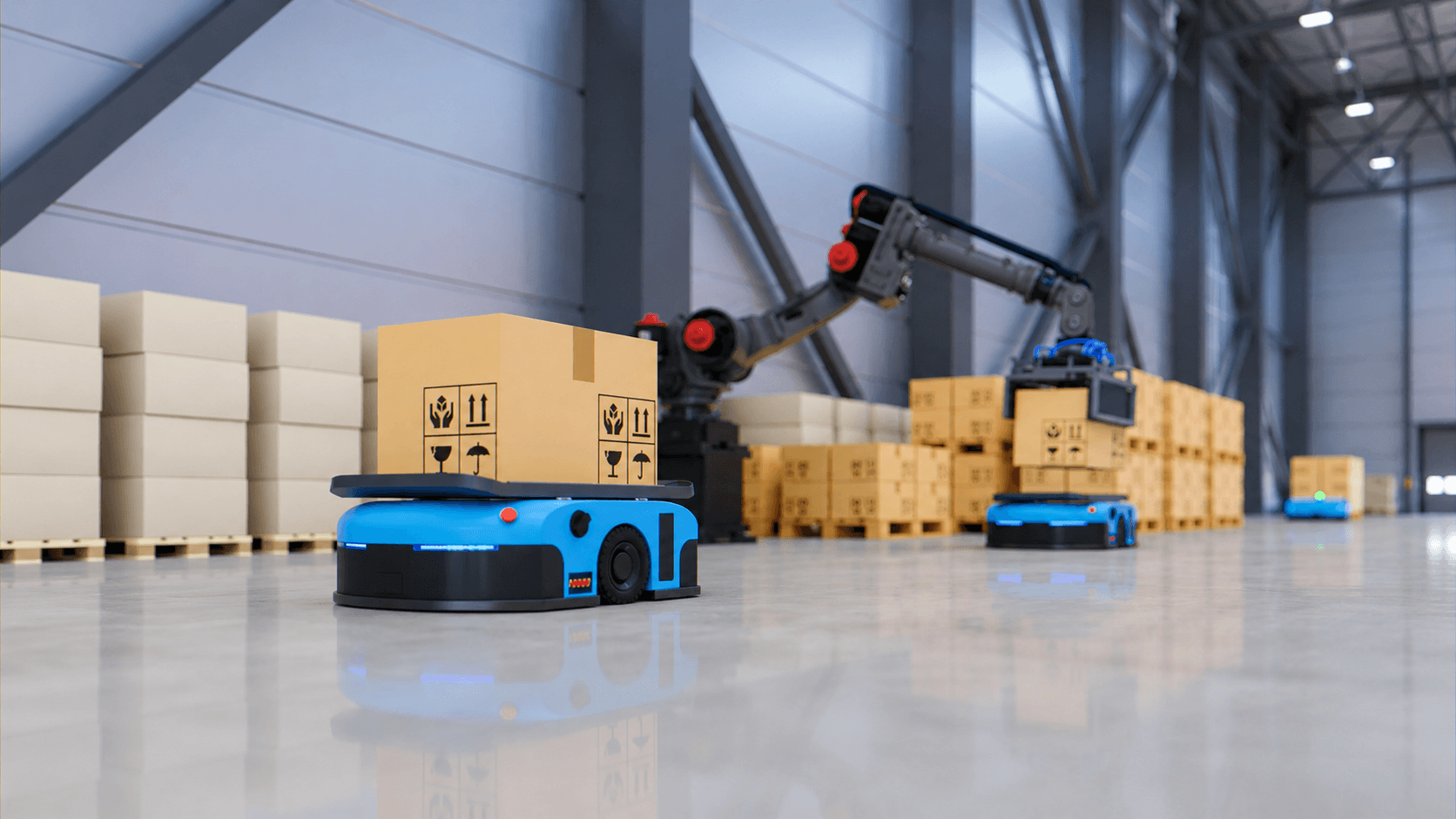
Let's learn what warehouse leaders often underestimate about robotics deployment, from system integration and facility readiness to hidden costs and change management.
A robotics vendor demo is a controlled environment. The robot moves precisely, the software responds instantly, and the whole system looks straightforward to run. That experience, while accurate for what it is, rarely reflects what happens when you bring the same technology into a real warehouse.
The gap between a compelling demonstration and a successful deployment is where most robotics projects run into trouble. It is not usually the technology that creates problems. It is the operational, organizational, and infrastructure conditions surrounding the technology that catch teams off guard.
Understanding these factors before you commit to a deployment plan is one of the most practical things a warehouse leader can do. In the following section, Robotech Pros will address the areas that experienced automation advisors see underestimated most consistently.
Common Assumptions vs. Deployment Realities
| What Leaders Often Assume | What Deployment Actually Requires |
|---|---|
| The robots will work with our existing WMS right away | Integration often requires custom API development, data mapping, and IT project time spanning weeks or months |
| Deployment will be complete in a few months | End-to-end deployments, from site assessment to scaled operations, typically take 12 to 24 months |
| Staff will adapt quickly once they see the robots working | Workforce change management requires structured training, role redefinition, and consistent communication before go-live |
| The hardware cost is the main budget item | Installation, integration labor, connectivity upgrades, and ongoing maintenance often exceed the hardware price over three years |
| Our facility is ready as-is | Floor condition, power capacity, Wi-Fi coverage, and aisle dimensions frequently require upgrades before deployment can begin |
| Productivity gains appear within the first quarter | Most operations see a measurable ROI improvement between 18 and 36 months after go-live, not within the first 90 days |
Facility Readiness Is Almost Always Underestimated
Most warehouse leaders walk into a robotics conversation thinking about the robot itself. Few spend the same energy evaluating whether the building is ready to support one. Facility readiness is one of the first things an experienced deployment team will assess. Floor flatness, surface condition, and load-bearing capacity all affect how AMRs and other mobile systems navigate and perform. A warehouse floor that works well for forklifts is not automatically suitable for autonomous robots.
Power infrastructure is another area that surprises teams. Charging stations for larger robot fleets require dedicated power runs, and some older facilities need electrical panel upgrades before any hardware arrives. Wi-Fi coverage and network reliability are equally important. Robots that rely on real-time communication with fleet management software will perform inconsistently in facilities with dead zones or congested wireless networks.
Ceiling height, aisle dimensions, door clearances, and traffic flow patterns also factor into deployment decisions. These are physical constraints that no amount of software configuration can resolve. Identifying them early prevents costly mid-project redesigns.
What to do before deployment begins: Commission a formal site readiness assessment before selecting your robot configuration. A qualified automation partner should evaluate your floor, power systems, connectivity, and space layout as part of the pre-sales process, not as an afterthought after the contract is signed.
System Integration Is Rarely as Simple as It Looks
Robotics systems do not operate in isolation. They need to communicate with your warehouse management system, and often with your ERP, labor management software, and any existing conveyor or sortation equipment. How cleanly that communication happens depends almost entirely on the existing state of your technology stack.
Many warehouses are still running WMS platforms that were not designed with robot integration in mind. Older systems may lack the APIs needed to exchange real-time data, which means the integration requires custom middleware development. Even modern WMS platforms require careful configuration to align task release logic, inventory synchronization, and exception handling with the way a robotic system expects to receive and return information.
Integration complexity is consistently one of the most significant contributors to deployment delays and cost overruns. IT teams are often underestimated in terms of the bandwidth the project will require from them. Treating integration as a background task tends to push timelines by weeks or months.
Integration Complexity by System Type
| System Type | Common Integration Challenge | Typical Time to Resolve |
|---|---|---|
| Legacy WMS (no API) | Requires middleware or custom connector development | 4 to 10 weeks |
| Modern WMS (REST API) | Data field mapping and order flow alignment | 2 to 5 weeks |
| ERP (SAP, Oracle, etc.) | Inventory sync, order release logic, and exception handling | 6 to 14 weeks |
| Labor Management System | Task interleaving and productivity metric realignment | 3 to 6 weeks |
| Conveyor or sortation equipment | Signal handshake and traffic management coordination | 2 to 8 weeks |
One practical step teams can take early is conducting an integration discovery session with your IT lead, WMS vendor, and robotics provider in the same room. Mapping the data flows before any development begins reduces the risk of discovering incompatibilities during go-live testing, when the cost of rework is highest.
Change Management: The Factor Most Deployment Plans Skip
Robotics deployments are technology projects on paper. In practice, they are organizational change projects that happen to involve technology. The human side of automation is where many otherwise technically sound deployments lose momentum.
Floor staff who do not understand why robots are being introduced, what their roles will look like afterward, or how performance will be measured during the transition are likely to disengage or resist. That resistance does not always show up as active opposition. It shows up as workarounds, inconsistent processes, and productivity numbers that do not match projections.
Supervisors face a different challenge. Managing a team that works alongside autonomous systems requires a different skill set than traditional floor supervision. They need to understand how to interpret fleet management dashboards, how to handle robot exceptions, and how to coach their teams through the adjustment period. Most organizations do not build supervisor training into the deployment plan.
Change management readiness is not difficult to assess, but it does require honest evaluation. The table below identifies key factors to consider before go-live.
Change Management Readiness Factors
| Readiness Factor | Signs You Are Ready | Signs You Need More Preparation |
|---|---|---|
| Leadership alignment | Operations, IT, and HR leaders are involved in planning | Only one department owns the project; others are not yet engaged |
| Staff communication | A clear rollout narrative has been prepared and shared | Workers first hear about the deployment from rumors or the day before go-live |
| Training infrastructure | Training schedules and materials are built into the deployment plan | Training is treated as an afterthought following go-live |
| Role redesign | Impacted roles have been reviewed and updated job descriptions are ready | No analysis of how daily tasks will change for floor staff or supervisors |
| Performance management | New KPIs that account for robot-assisted workflows are defined | Existing productivity metrics remain unchanged, creating conflict with new operations |
The Full Cost Picture Goes Well Beyond Hardware
Hardware pricing is usually the first number warehouse leaders see when evaluating robotics. It is also the most incomplete number in the conversation. The total cost of a robotics deployment extends across integration, infrastructure, training, maintenance, and ongoing software licensing, and those costs accumulate over the full lifecycle of the system. One pattern worth understanding is the productivity dip that often follows initial go-live. As teams adjust to new workflows, throughput can decline before it improves. This is not a sign that the deployment is failing. It is a normal part of the adoption curve. But it does need to be accounted for in any honest ROI model.
Realistic ROI timelines for most warehouse robotics deployments fall in the range of 18 to 36 months. Projects that are sold on 6 to 12 month payback periods are often working with incomplete cost assumptions. Building a full-lifecycle cost model before committing gives leadership a more defensible business case and reduces the risk of budget surprises mid-project.
Hidden Cost Categories in a Robotics Deployment
| Cost Category | What Is Typically Budgeted | What Is Often Missed |
|---|---|---|
| Hardware | Robot units and charging infrastructure | Spare parts inventory, sensor replacements, and floor fixture modifications |
| Software and licensing | Initial WMS integration license | Annual subscription fees, upgrade costs, and additional module licenses as operations scale |
| Installation and commissioning | Basic installation labor | Infrastructure modifications, power upgrades, floor repairs, and network extension |
| IT and integration | Initial API connection | Ongoing maintenance of integrations, incident response, and version compatibility updates |
| Training and change management | A one-time training session | Refresher training cycles, supervisor coaching, and productivity dip costs during the transition period |
| Ongoing maintenance and support | Vendor warranty coverage | Post-warranty service contracts, preventive maintenance labor, and emergency repair response time |
What a Realistic Deployment Timeline Actually Looks Like
One of the most common misalignments between expectation and reality in robotics deployment is timing. Vendors sometimes frame deployment in terms of how long the physical installation takes, which can genuinely be a matter of weeks. What that framing leaves out is everything before and after.
A complete deployment arc typically includes a site assessment and readiness evaluation phase, followed by system design and procurement, integration development and testing, staff training and change management, a controlled pilot period, and then phased scale-up across additional zones or workflows. Each of these phases takes time, and each depends on the phase before it.
Organizations that plan for a 3-month deployment and encounter a 14-week integration cycle tend to treat the extra time as a project failure. Organizations that plan for a 12 to 18 month arc and execute in 14 months treat the same timeline as a success. The difference is in how the plan was constructed from the beginning.
A practical planning frame: Add 30 percent to any vendor-provided timeline estimate to account for integration delays, facility modifications, and procurement lead times. Then plan your business case and internal stakeholder communications around that adjusted number.
How Robotech Pros Supports Deployment Planning
At Robotech Pros, we work with warehouse and operations teams at the planning stage, before commitments are made. That means helping organizations conduct honest facility and readiness assessments, map integration complexity against their existing systems, and build deployment plans with realistic timelines and full-lifecycle cost models.
Our role is not to push a specific robot platform. It is to help operations leaders understand what a successful deployment actually requires and then support the execution. If your team is evaluating robotics options or trying to pressure-test a deployment plan you have already received, we are glad to work through it with you.
The Most Costly Assumptions Are the Ones Made Early
Robotics deployments succeed when the conditions surrounding the technology are as carefully planned as the technology itself. Facility readiness, integration complexity, workforce change management, and realistic cost modeling are not secondary concerns. They are the factors that separate deployments that deliver on their promise from those that stall at the pilot stage.
The leaders who navigate this well are not necessarily the ones with the most technical expertise. They are the ones who ask hard questions early, build realistic plans, and treat the organizational side of automation with the same seriousness as the operational side.
If you are beginning to think through a deployment, a structured readiness conversation is a practical place to start. Reach out to our team at contact@robotechpros.com and we will help you identify which areas of your facility, technology stack, and workforce plan deserve the closest attention before any commitments are made.
Frequently Asked Questions
What are the most common reasons warehouse robotics deployments fail to meet expectations? The most frequent causes are incomplete facility assessments, underestimated integration complexity with existing WMS or ERP systems, inadequate change management planning, and ROI timelines that did not account for the full cost of deployment. Most of these issues are identifiable before the project begins if a thorough planning process is followed.
How long does a typical warehouse robotics deployment take from start to full operation?
End-to-end deployments, from initial site assessment through scaled operation, typically take 12 to 24 months for mid-to-large facilities. Smaller scoped deployments or those with strong infrastructure readiness can move faster, but timelines under 6 months from contract to go-live are rare for complex environments.
What does facility readiness for robotics deployment actually involve?
Facility readiness covers floor surface condition and flatness, power capacity and electrical infrastructure, Wi-Fi network coverage and reliability, aisle dimensions and clearances, traffic flow patterns, and environmental factors such as temperature and lighting. A formal site assessment by a qualified team should evaluate all of these factors before a deployment configuration is finalized.
How should warehouse leaders approach the workforce side of robotics deployment?
Change management should be treated as a core project workstream, not an add-on. This means communicating clearly and early with affected staff, redefining roles before go-live rather than after, building supervisor training into the deployment plan, and adjusting performance metrics to reflect the new operating model. Teams that invest in this process consistently see faster productivity recovery after go-live.
What hidden costs should be included in a robotics deployment budget?
Beyond hardware, organizations should budget for integration development labor, infrastructure modifications, annual software licensing fees, ongoing maintenance and service contracts, spare parts inventory, training programs, and the productivity impact during the transition period. A full-lifecycle cost model built over a three to five year horizon provides a more accurate picture of total cost of ownership than hardware pricing alone.
Related resources

How Many AMRs Do You Actually Need? A Guide to Throughput Modeling
Most AMR fleet sizes are guessed before anyone counts the moves. This guide walks through the four-step throughput model that replaces the guess, and explains why doubling throughput takes more than double the robots.
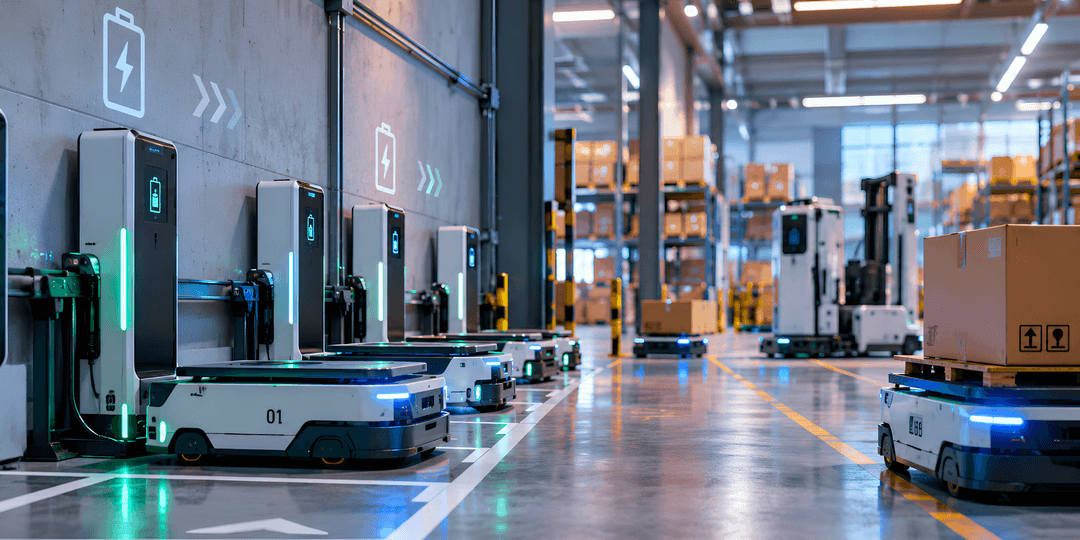
Robot Charging Infrastructure: Battery Strategy, Opportunity Charging, and Floor Space Planning
Charging is usually treated as an electrical question and handed to an electrician. The harder question is how much productive floor space the dock bank consumes, and how much of the fleet sits parked when throughput pea

How Racking, Aisle Widths, and Mezzanines Limit Your Automation Options
Most automation shortlists are decided by the building, not the vendor. A practical look at how rack configuration, clear aisle width, and mezzanine design rule options in or out, and what to measure before you invite an