Robotics Guide
The Complete Guide to Industrial Robotics in 2026
Jan 7, 2026 · 18 min read · Robotech Pros
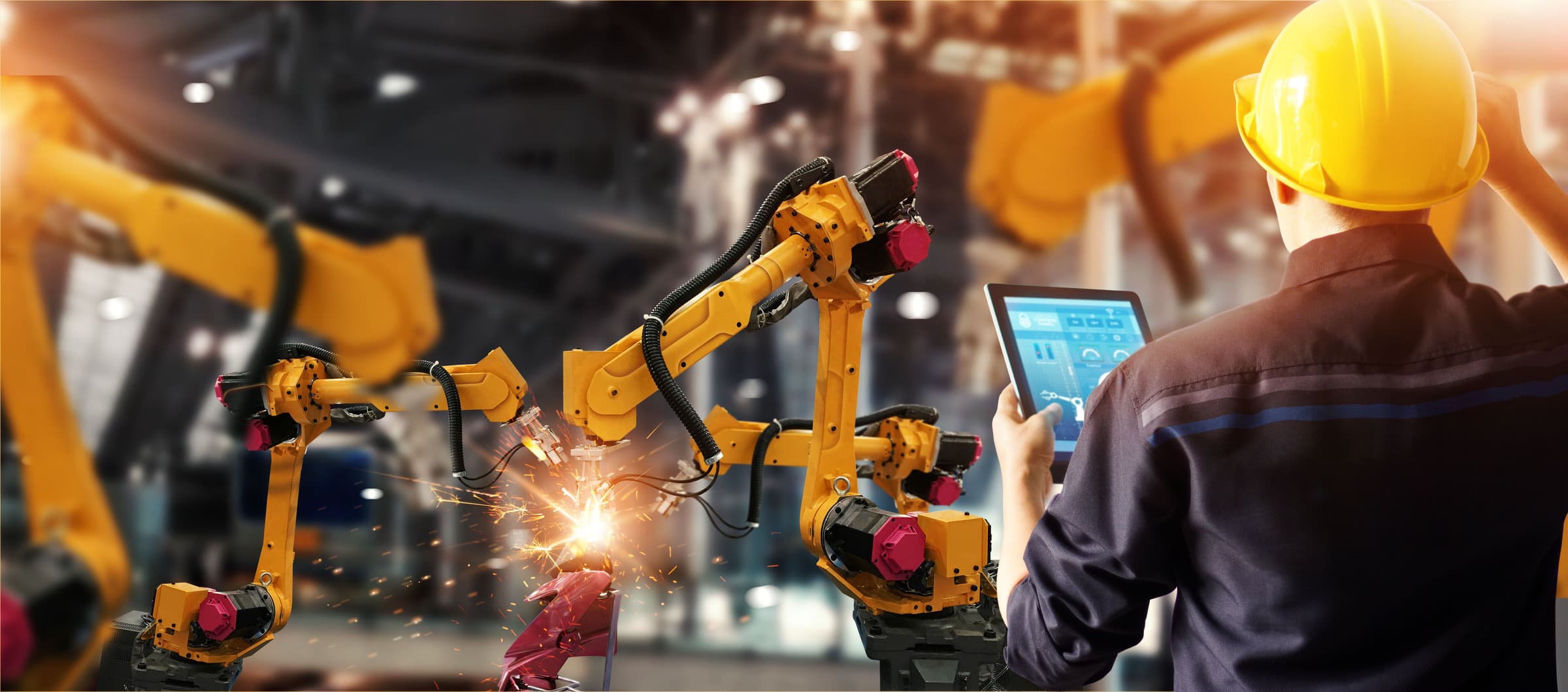
Industrial robotics is reshaping manufacturing and logistics in 2026. Explore how AI-powered automation, AMRs, cobots, and smart robotics systems are helping businesses improve efficiency and scale faster.
Automation Is Entering a New Era
For many manufacturers and logistics operators, industrial robotics is no longer a distant innovation, it is quickly becoming a practical tool for improving productivity, resilience, and operational efficiency. Companies that once viewed automation as a long-term investment are now exploring robotics as an immediate solution to labor shortages, rising operational costs, and increasing customer expectations.
At Robotech Pros, we work closely with organizations that are beginning this automation journey. Many of them share the same question: Where do we start with industrial robotics, and how can we implement it effectively without disrupting operations?
Industrial robotics in 2026 looks very different from the rigid automation systems of the past. Modern robots combine mechanical precision with artificial intelligence, advanced sensors, and powerful software platforms that allow them to adapt to changing environments and collaborate safely with human workers.
This guide brings together key insights from across the robotics industry to help business leaders understand how industrial robotics works today and how companies can begin adopting it strategically.
Industrial Robotics Market Snapshot (2026)
| Metric | Latest Data |
|---|---|
| Industrial robots installed globally (2024) | 542,000 units |
| Consecutive years above 500k installations | 4 years |
| Total robots operating worldwide | ~4.66 million units |
| Largest region for robot installations | Asia (~74%) |
| Largest single market | China |
According to the International Federation of Robotics (IFR), global factories installed over 542,000 industrial robots in 2024, more than double the number deployed a decade earlier. The global operational stock of industrial robots has reached roughly 4.6 million units, demonstrating the rapid acceleration of automation across manufacturing and logistics industries.
Industrial robotics is no longer limited to highly automated automotive factories. In 2026, robotics is rapidly becoming a core operational tool across manufacturing, logistics, electronics, food processing, and e-commerce fulfillment.
Companies today face a combination of pressures: labor shortages, rising production costs, increasing demand volatility, and the need for faster delivery cycles. As a result, robotics is shifting from a "future investment" to a strategic operational necessity.
What makes this moment particularly important is the convergence of several technologies:
- Artificial intelligence and machine vision
- Autonomous navigation systems
- Cloud and edge computing
- Advanced sensors and robotics software
These technologies allow robots to perform tasks that previously required human judgment, not just repetitive motion. Robots can now identify objects, adapt to changing environments, collaborate with workers, and optimize operations in real time.
For businesses evaluating automation, understanding how industrial robotics works and how to deploy it effectively has become critical.
What Is Industrial Robotics?
Industrial robotics refers to programmable machines designed to automate physical tasks in industrial environments, including manufacturing, material handling, packaging, inspection, and logistics operations.
Traditional industrial robots were typically large robotic arms performing repetitive operations such as welding or painting on assembly lines. These robots were powerful but relatively inflexible.
Modern robotics systems are far more advanced. Today’s robots combine mechanical hardware with software intelligence, sensors, and AI‑driven decision systems. This enables capabilities such as:
- Object recognition using machine vision
- Autonomous navigation through warehouses
- Safe collaboration with human workers
- Adaptive task programming
Rather than replacing workers entirely, industrial robotics is increasingly used to augment human capabilities, allowing employees to focus on higher‑value tasks such as supervision, quality control, and problem solving.
Why Robotics Adoption Is Accelerating
The rapid expansion of industrial robotics is largely driven by several operational challenges that companies face today.
How Robotics Solves Operational Challenges
| Business Challenge | How Robotics Helps |
|---|---|
| Labor shortages | Automates repetitive or physically demanding tasks |
| Productivity pressure | Enables consistent 24/7 production |
| Workplace safety | Performs hazardous operations such as welding or heavy lifting |
| Demand fluctuations | Allows companies to scale operations efficiently |
| Quality control | Improves precision and reduces production errors |
Industrial robotics adoption has been accelerating globally over the past decade, and the trend is expected to continue through 2030.
Industrial robotics adoption has been accelerating globally over the past decade, and the trend is expected to continue through 2030.
Several factors are driving this shift.
1. Labor shortages across industries
Manufacturing and logistics companies around the world are struggling to hire workers for physically demanding or repetitive roles.
Robotics helps organizations maintain productivity even when labor supply becomes constrained.
2. Increasing demand for operational efficiency
Robots operate with consistent speed and precision. They can run continuously with minimal downtime, allowing companies to increase throughput and reduce error rates.
3. Workplace safety improvements
Many industrial environments involve hazardous tasks such as heavy lifting, exposure to extreme temperatures, or handling dangerous materials.
Robots can perform these tasks safely while reducing workplace injuries.
4. Supply chain resilience
Automation reduces reliance on manual labor and enables companies to maintain production even during disruptions.
This became particularly important after recent global supply chain shocks.
Key Types of Industrial Robots Used in 2026
Before exploring each category in detail, the table below summarizes the major robot types used across modern industrial environments
| Robot Type | Key Capabilities | Typical Industries |
|---|---|---|
| Articulated Robots | Multi-axis robotic arms designed for precision tasks | Automotive, heavy manufacturing |
| Autonomous Mobile Robots (AMRs) | Navigate facilities dynamically using sensors and AI | Warehousing, logistics |
| Collaborative Robots (Cobots) | Safely work alongside human workers | Electronics, packaging |
| Robotic Picking Systems | Vision-guided robotic arms capable of identifying objects | E-commerce fulfillment |
| Automated Guided Vehicles (AGVs) | Follow predefined routes for structured material transport | Manufacturing plants |
Industrial robotics now includes a wide range of systems designed for different operational needs.
Articulated Robotic Arms
Articulated robots are the most widely used industrial robots. These robotic arms typically have 4–6 axes of movement, allowing them to perform highly precise operations.
Common applications include:
- Welding
- Assembly
- Machine tending
- Painting
- Material handling
These robots are widely used in automotive, electronics, and heavy manufacturing industries.
Autonomous Mobile Robots (AMRs)
Autonomous mobile robots are transforming logistics operations.
Unlike traditional automated guided vehicles (AGVs), AMRs navigate dynamically using sensors, cameras, and mapping algorithms.
They are commonly used for:
- Transporting materials within warehouses
- Moving inventory between storage and picking areas
- Delivering components to production lines
AMRs help create flexible warehouse environments that can scale quickly as demand grows.
Collaborative Robots (Cobots)
Collaborative robots, often called cobots, are designed to operate safely alongside human workers.
Unlike traditional robots that require safety cages, cobots use sensors and force‑limiting technology to prevent injuries.
Typical use cases include:
- Packaging
- Light assembly
- Quality inspection
- Pick‑and‑place tasks
Cobots are particularly popular with mid‑sized manufacturers because they are relatively easy to deploy and reprogram.
Robotic Picking Systems
Robotic picking systems combine robotic arms with AI vision systems to identify and grasp objects.
These systems are increasingly used in:
- E‑commerce fulfillment
- Food and beverage logistics
- Pharmaceutical distribution
Advances in machine vision now allow robots to pick irregularly shaped items with high accuracy.
Real‑World Case Studies of Robotics in Action
Understanding how companies deploy robotics in real operations provides useful insights into its business value.
Case Study 1: Amazon’s Robotics‑Powered Fulfillment Centers
Amazon operates one of the most advanced warehouse robotics ecosystems in the world.
Its fulfillment centers use thousands of mobile robots that transport storage pods across warehouse floors. Workers and robotic picking systems retrieve items from these pods, dramatically reducing walking time and increasing order processing speed.
The result is a logistics operation capable of processing millions of orders per day while improving efficiency and worker productivity.
Case Study 2: Automotive Manufacturing Automation
The automotive industry has long been a pioneer of industrial robotics.
Manufacturers such as Tesla, Toyota, and BMW rely heavily on robotic arms for welding, painting, and vehicle assembly.
In some modern automotive plants, robots perform the majority of repetitive tasks, while human workers focus on engineering, quality assurance, and system monitoring.
Case Study 3: Electronics Manufacturing
Electronics production requires extremely high levels of precision. Robotic systems are widely used for assembling delicate components such as circuit boards, sensors, and microelectronics.
These systems allow manufacturers to maintain consistent quality while producing large volumes of devices.
How Robotech Pros Helps Businesses Deploy Robotics Successfully
Implementing robotics requires more than simply purchasing equipment. Successful automation projects involve workflow design, system integration, and long‑term operational support.
Robotech Pros works with companies to develop robotics strategies tailored to their operational needs.
Automation Strategy and Assessment
Our team analyzes facility workflows to identify where robotics can deliver the greatest productivity improvements.
Robotics System Integration
Robotech Pros designs and integrates robotics systems that work seamlessly with existing manufacturing equipment and software platforms.
Deployment and Optimization
From installation to performance tuning, we ensure robotics systems operate efficiently from day one.
Maintenance and Long‑Term Support
Robotics systems require ongoing monitoring and optimization. Our engineers provide maintenance and support to ensure maximum uptime.
Conclusion
Industrial robotics is rapidly transforming how modern industries operate. From smart factories to automated warehouses, robots are helping companies increase productivity, improve workplace safety, and build more resilient supply chains.
However, successful automation requires more than simply purchasing robots. It requires careful planning, system integration expertise, and a clear strategy for scaling automation over time.
This is where experienced robotics integrators can make a meaningful difference. By combining engineering expertise with practical deployment experience, companies like Robotech Pros help organizations design automation solutions that align with real operational needs and long‑term growth strategies.
For businesses exploring robotics, the most important step is often the first one: understanding where automation can create the greatest operational impact. If you're evaluating robotics for your facility, contact us via email: contact@robotechpros.com to explore how automation can improve your operations.
Related resources
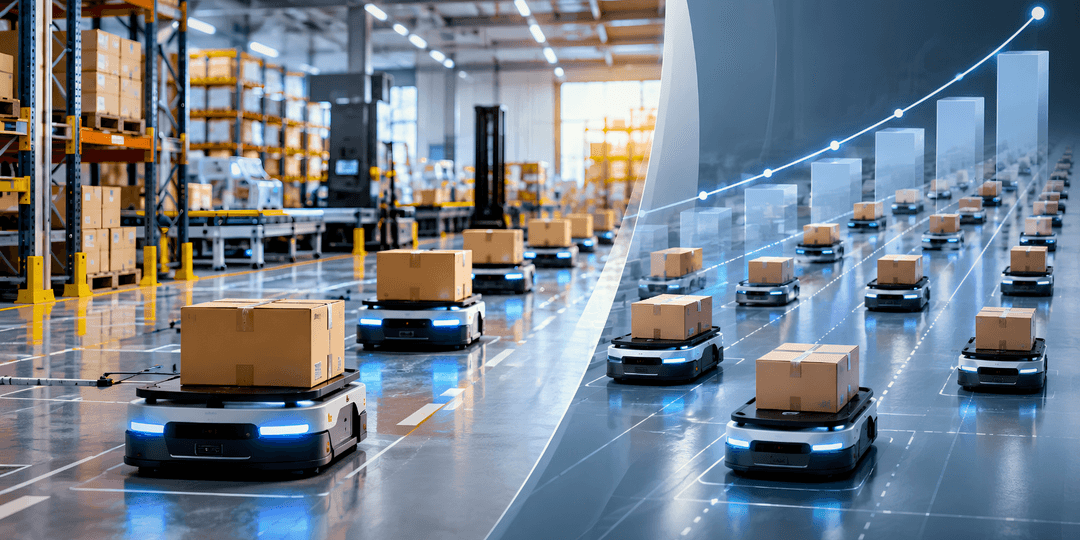
How Many AMRs Do You Actually Need? A Guide to Throughput Modeling
Most AMR fleet sizes are guessed before anyone counts the moves. This guide walks through the four-step throughput model that replaces the guess, and explains why doubling throughput takes more than double the robots.
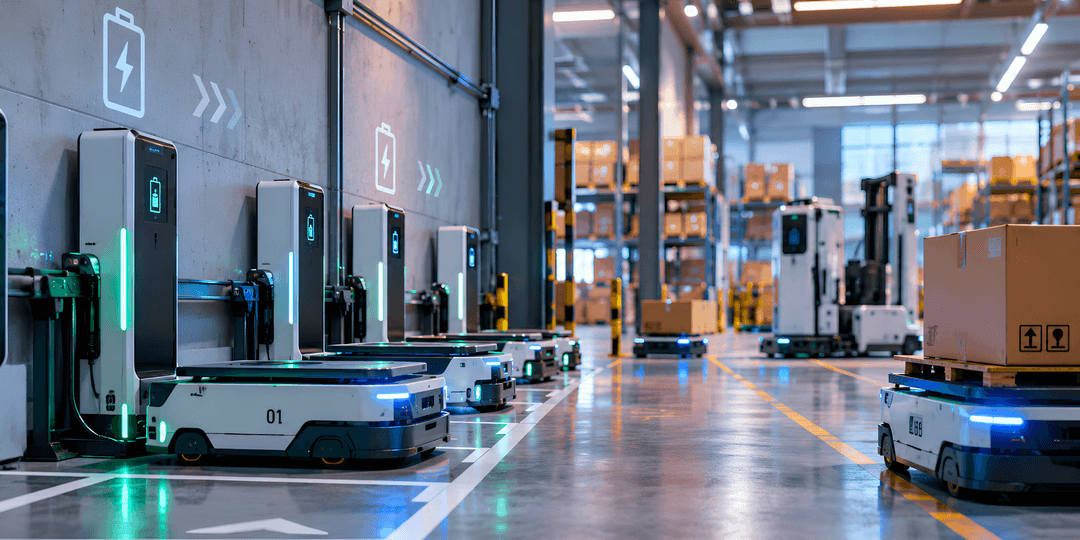
Robot Charging Infrastructure: Battery Strategy, Opportunity Charging, and Floor Space Planning
Charging is usually treated as an electrical question and handed to an electrician. The harder question is how much productive floor space the dock bank consumes, and how much of the fleet sits parked when throughput pea
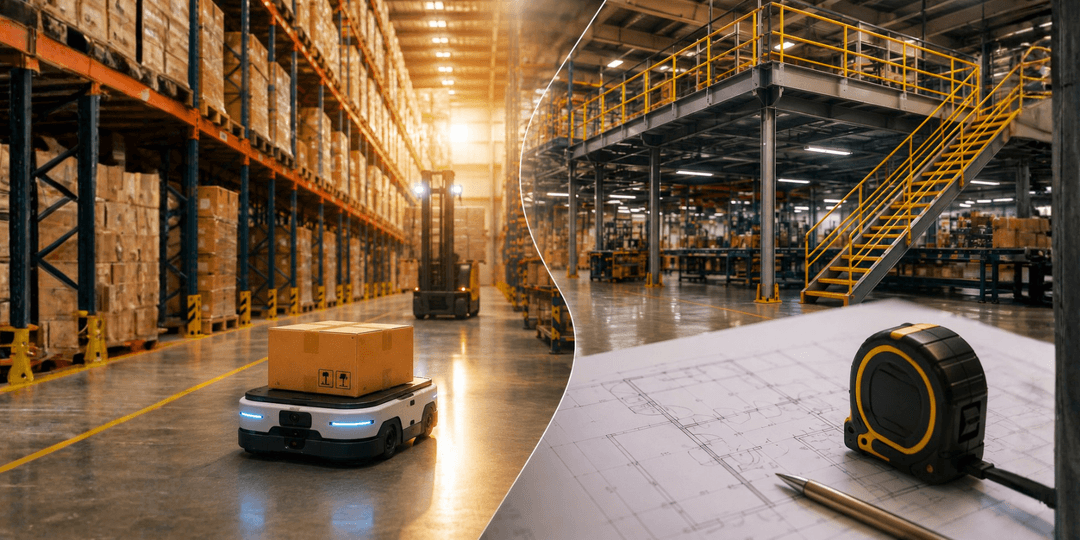
How Racking, Aisle Widths, and Mezzanines Limit Your Automation Options
Most automation shortlists are decided by the building, not the vendor. A practical look at how rack configuration, clear aisle width, and mezzanine design rule options in or out, and what to measure before you invite an