Manufacturing & Logistics
How Robotics Solves Labor Shortages in Manufacturing and Logistics
Jan 8, 2026 · 15 min read · Robotech Pros
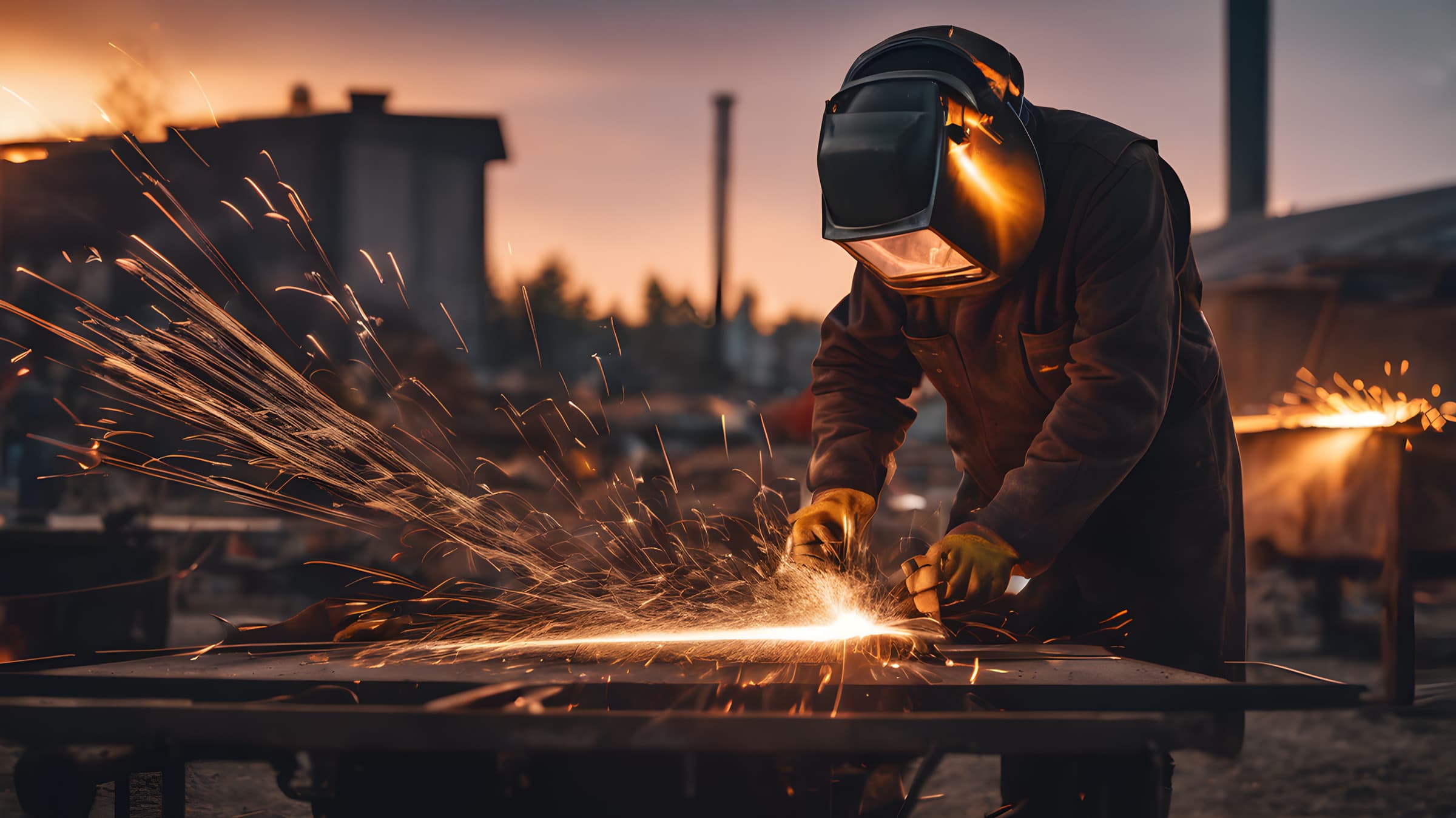
Discover how robotics helps manufacturers and warehouses overcome labor shortages, improve workflow stability, and increase operational efficiency through smart automation
Labor Shortages Are Changing How Operations Run
For many manufacturers and logistics operators, labor shortages are no longer a short-term hiring problem. They are affecting how daily operations run.
Warehouses are under pressure from rising order volumes, tighter service expectations, and difficulty filling physically demanding frontline roles. Manufacturing teams face similar strain when output depends on repetitive handling, line-side material movement, machine tending, or support work that is hard to staff consistently. When these roles go unfilled, the impact shows up quickly in missed throughput, overtime, delayed shipments, and operational fatigue.
The broader industry context supports this shift. The International Federation of Robotics has highlighted shortages of truck drivers, warehousing staff, and dockworkers as a major supply-chain challenge, while also pointing to AI-equipped robots as part of the industry response. That matters because it reframes robotics from a future-focused investment into a practical tool for dealing with workforce constraints now.
That does not mean robotics is replacing people wholesale. In practice, the value is usually more specific than that. Robotics helps companies reduce dependence on hard-to-fill roles, stabilize repetitive work, and free up available labor for tasks where people add more value.
Robotech Pros fits naturally into this conversation. The current website positions the company around mobile robotics, custom integration, software support, maintenance and customization, training, and strategic guidance for industries and manufacturers.
Why Hiring Harder Is Not Always Enough
When staffing gets tight, many operations respond the same way: recruit more aggressively, add overtime, bring in temporary labor, or rely on supervisors to keep work moving through manual workarounds. These steps can help in the short term, but they rarely fix the underlying problem.
Many manufacturing and logistics workflows still depend on people doing large amounts of repetitive, low-complexity movement. In warehouses, that often means walking, transporting, sorting, loading, or moving inventory between zones. In manufacturing, it may mean delivering materials to lines, replenishing stations, or handling repetitive support tasks around machines.
These are exactly the jobs that become hardest to staff consistently. They are repetitive, physically demanding, and often difficult to scale during peaks. As long as the operating model depends heavily on those roles, every staffing gap becomes a direct risk to output. This is where robotics becomes useful. It allows companies to redesign where labor is actually needed instead of trying to solve every shortage with more hiring.
How Robotics Helps Day to Day
Robotics helps solve labor shortages through a few practical operating mechanisms that build value over time.
It takes over repetitive movement
One of the clearest advantages is that robots can handle repetitive transport and handling tasks. In logistics, this often means Autonomous Mobile Robots moving totes, carts, shelves, or materials across the warehouse. In manufacturing, it may mean robots supporting material flow between production zones, delivering parts to workstations, or handling routine movement that would otherwise require constant manual support.
These tasks are necessary, but they consume labor without always adding much value. A picker walking long distances is not spending that time picking. A production worker transporting materials between stations is not spending that time on quality or output-critical work.
It makes routine execution more stable
Labor shortages create inconsistency. One shift is fully staffed, the next is not. One zone keeps up, another falls behind. Robots help create a more predictable layer of execution for recurring tasks. They do not remove all variability, but they reduce how exposed the operation is to constant staffing swings in the same repetitive roles.
It shifts people toward higher-value work
When robots take over repetitive movement, available staff can focus on work that needs judgment and accuracy, such as:
- Exception handling
- Quality checks
- Order verification
- Customer-specific packing requirements
- Equipment oversight
- Workflow supervision
This is one of the biggest advantages of robotics in labor-constrained operations. It helps businesses use the people they do have more effectively.
It supports peak periods more effectively
Peak seasons expose labor weakness fast. Warehouses may struggle to hire enough temporary labor, and manufacturers may struggle to keep shifts fully covered when demand rises. Robotics creates a more scalable operating base, making it easier to handle volume increases without relying entirely on short-term hiring.
The International Federation of Robotics has also pointed to strong investment in professional service robots for goods transportation, linking that growth to labor pressures across logistics.
| Labor Challenge | How Robotics Helps | Operational Effect |
|---|---|---|
| Repetitive transport work is hard to staff | Mobile robots automate internal movement | Less dependence on hard-to-fill roles |
| High worker travel time reduces productivity | AMRs move goods closer to where work happens | More productive labor hours |
| Peak demand creates staffing gaps | Robotics adds scalable support capacity | More stable throughput |
| Physically repetitive work increases strain | Robots absorb strenuous routine tasks | Better ergonomics and safer workflows |
| Labor variability disrupts execution | Robots create more consistent task support | More predictable daily operations |
What Companies Are Doing Now
The value of robotics is easiest to understand when you look at how leading operators are using it.
DHL Supply Chain announced in 2024 that it had passed 500 million picks using Locus Robotics autonomous mobile robots across 35 sites worldwide. That milestone shows how robotics can support labor-intensive fulfillment work at scale. Just as importantly, DHL presents these deployments as human-robot collaboration designed to improve productivity and resilience, not as a simple labor replacement story.
Amazon offers a similar lesson from a different scale. The company has long used collaborative robotics inside fulfillment centers and describes robots as a way to handle heavy lifting and repetitive transport so employees can focus on other work. That framing matters for smaller operators too. Robotics does not have to mean a fully automated facility. It can mean reducing the parts of the workflow that are most labor-intensive and hardest to staff.
The common thread across these examples is straightforward: robotics creates the most value when it supports recurring, labor-intensive parts of the workflow that are difficult to stabilize through hiring alone.
Where Robotics Delivers the Fastest Relief
Not every labor problem is a good fit for robotics. The fastest gains usually come from tasks that are repetitive, measurable, and closely tied to throughput.
In logistics and warehousing
Early gains often come from:
- Internal transport between zones
- Picking support and goods movement
- Container unloading support
- Repetitive replenishment movement
- Order consolidation and transfer to packing or shipping
These workflows are labor-intensive, highly repetitive, and vulnerable to staffing gaps.
In manufacturing
Manufacturing environments often benefit when robotics supports:
- Line-side material delivery
- Repetitive part transport
- Machine tending support
- Workstation replenishment
- Movement between production cells or storage areas
These may not always be the most visible roles, but they often keep the operation moving. When staffing becomes unstable, they become bottlenecks quickly.
| Environment | High-Impact Robotics Use Cases |
|---|---|
| Warehouse / distribution center | AMRs, picking support, internal transport, unloading support |
| Manufacturing plant | Line-side delivery, machine tending support, repetitive material flow |
| Mixed industrial site | Cross-zone transport, repetitive handling, safety-sensitive support tasks |
A good rule of thumb is simple: the more a task is tied to repetitive movement and daily flow friction, the stronger its potential as a robotics use case.
What Companies Should Evaluate Before Investing
For businesses dealing with labor shortages, the best starting point is usually an operational assessment.
A few questions matter most.
Where is labor pressure hurting performance most?
Is the problem concentrated in picking, transport, loading, line support, or something else?
Which tasks are repetitive enough to automate well?
Robotics tends to deliver faster value when the task is repeated often, follows a clear pattern, and has a measurable effect on throughput.
How much labor is spent on non-value-added movement?
If teams spend too much time walking, transferring, staging, or transporting, robotics may improve productivity before it changes headcount needs.
What needs to integrate with the solution?
Robots create more value when they connect to real workflows, software systems, and operating triggers.
| Evaluation Question | Why It Matters |
|---|---|
| Which tasks are hardest to staff? | Reveals the best first automation target |
| Where is labor spent on repetitive movement? | Identifies productivity opportunity |
| What systems or processes must connect to robotics? | Defines implementation complexity |
| Can value be proven through a pilot? | Reduces risk and builds operational evidence |
| How will success be measured? | Keeps the project grounded in real outcomes |
How Robotech Pros Can Help
Robotech Pros is positioned around exactly the kind of support many operators need when labor shortages begin to affect performance.
The current website highlights mobile robotics for industries and manufacturers in Southern California, supported by custom integration, software and interface support, preventive maintenance, technical response, training, and strategic consultation. That matters because labor-related workflow problems are rarely solved by hardware alone. They are solved by matching the right robotics solution to the right process and making sure it performs reliably in the real operating environment.
Robotech Pros can help businesses:
- Assess where labor shortages are creating the most operational pressure
- Identify practical mobile robotics opportunities
- Integrate robotics into existing systems and workflows
- Support adoption with training, maintenance, and technical service
- Build a phased automation strategy that improves performance over time
Conclusion
Labor shortages in manufacturing and logistics are unlikely to disappear soon. For many operations, that means the old playbook of hiring harder, extending overtime, or relying on temporary labor is no longer enough.
Robotics offers a more durable response. It helps companies reduce dependence on repetitive manual work, stabilize routine execution, and use available labor more effectively.
The biggest gains usually come when robotics is used to redesign labor-intensive workflows so people and automation each do what they do best.
If your operation is struggling with labor-intensive workflows, Robotech Pros can help you identify where robotics will create the greatest operational impact.
Related resources
How Many AMRs Do You Actually Need? A Guide to Throughput Modeling
Most AMR fleet sizes are guessed before anyone counts the moves. This guide walks through the four-step throughput model that replaces the guess, and explains why doubling throughput takes more than double the robots.
Robot Charging Infrastructure: Battery Strategy, Opportunity Charging, and Floor Space Planning
Charging is usually treated as an electrical question and handed to an electrician. The harder question is how much productive floor space the dock bank consumes, and how much of the fleet sits parked when throughput pea
How Racking, Aisle Widths, and Mezzanines Limit Your Automation Options
Most automation shortlists are decided by the building, not the vendor. A practical look at how rack configuration, clear aisle width, and mezzanine design rule options in or out, and what to measure before you invite an