Autonomous Mobile Robots
How Autonomous Mobile Robots (AMRs) Are Transforming Modern Warehouses
Feb 14, 2026 · 16 min read · Robotech Pros
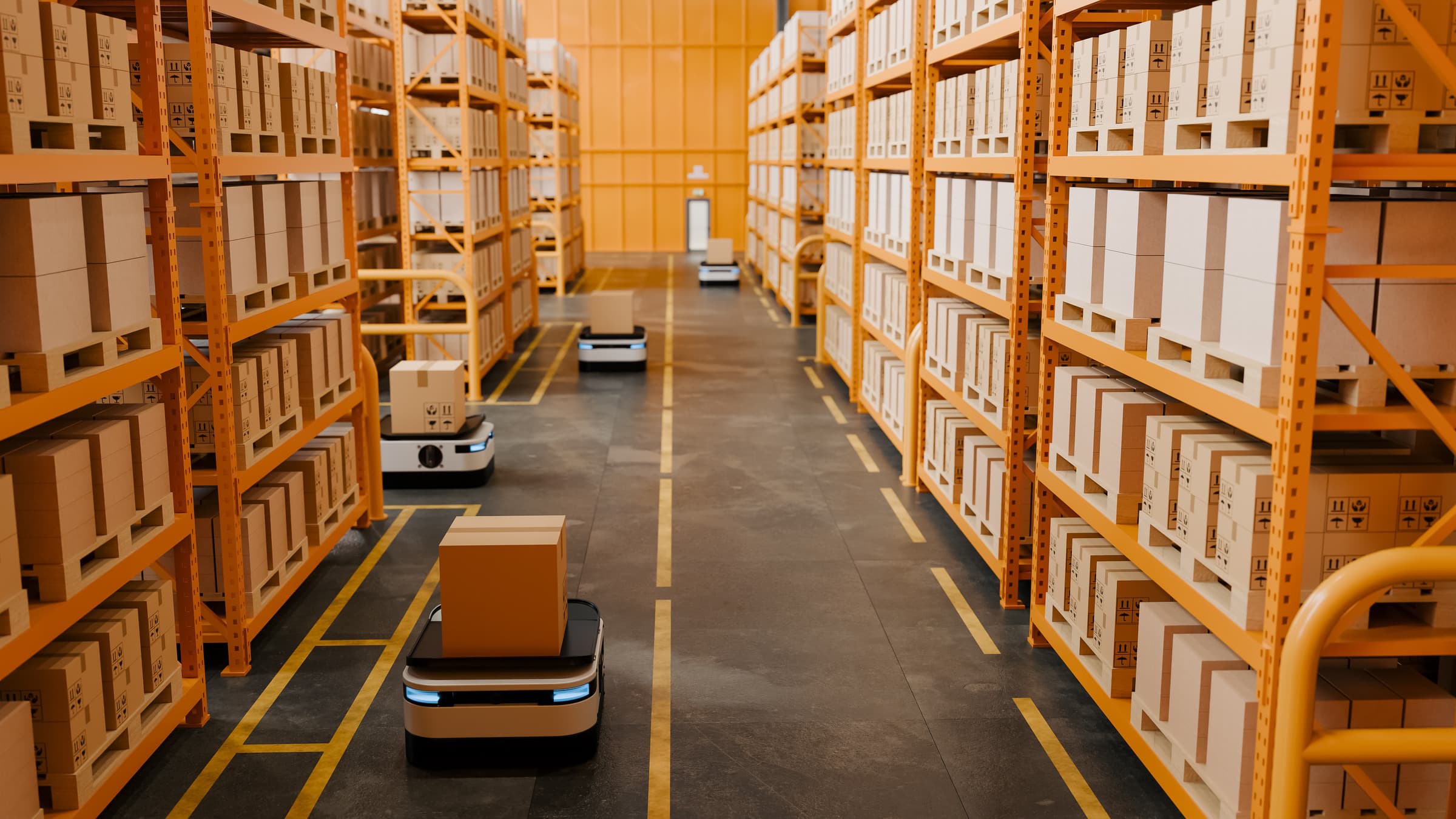
Autonomous Mobile Robots are transforming warehouse operations by reducing manual transport, improving workflow efficiency, and helping businesses scale faster with flexible automation solutions.
Why Warehouse Operations Are Reaching a Turning Point
Warehouse operations are entering a new phase of complexity. E-commerce has increased expectations for faster fulfillment, product variety continues to expand, and order profiles are far less predictable than they once were. Yet many warehouses still rely on workflows built around people walking long distances, manually transporting goods, and absorbing variability through labor alone.
Autonomous Mobile Robots (AMRs) are gaining attention because they address this structural problem. Rather than acting as another piece of warehouse equipment, AMRs introduce a coordinated, software‑driven layer for internal movement. They transform transport, from a manual support activity into an orchestrated operational system.
At Robotech Pros, many warehouse teams begin their automation journey here. Compared with large fixed‑automation projects, AMRs can be deployed in phases, adapted to existing facilities, and aligned with immediate operational pain points. For many organizations, they provide a practical entry point into warehouse automation without requiring a full facility redesign.
This guide explores how AMRs are reshaping warehouse operations, where they create the most value, what companies should evaluate before deployment, and how mobile robotics fits into a broader automation strategy.
From Fixed Routes to Intelligent Movement: Why AMRs Matter
Earlier warehouse automation systems, such as conveyors, sortation systems, or Automated Guided Vehicles (AGVs), were built around fixed infrastructure and predictable flows. These technologies can perform extremely well in structured environments, but they are harder to adapt when layouts change, SKU counts grow, or operational patterns evolve.
AMRs introduce a different model.
Instead of following fixed paths, AMRs navigate dynamically using technologies such as:
- LiDAR and vision sensors
- Simultaneous localization and mapping (SLAM)
- Real‑time obstacle detection
- Fleet management software
- Task orchestration and route optimization
Because warehouses are constantly changing environments: pallets move, forklifts cross aisles, workers shift locations, this flexibility matters. AMRs can detect obstacles, recalculate routes, and continue operating with minimal disruption.
This capability allows warehouses to automate internal movement without committing immediately to rigid infrastructure.
The distinction between AGVs and AMRs is therefore strategic, not just technical.
| Automation Model | Operating Logic | Limitation | Strategic Advantage |
|---|---|---|---|
| AGVs | Follow predefined routes | Less flexible when layouts change | Reliable for highly repetitive flows |
| AMRs | Navigate dynamically | Require stronger integration and workflow planning | Adapt better to evolving warehouse environments |
For facilities expecting growth, seasonal fluctuation, or layout changes, that flexibility becomes highly valuable.
The Real Value of AMRs: Redesigning Warehouse Workflow
Thinking of AMRs as robotic carts misses their real impact.
Their greatest value lies in how they redesign workflow.
In many warehouses, productivity is limited not by worker capability but by the structure of the process. Pickers spend large portions of their shift walking. Replenishment teams transport materials across long distances. Supervisors manage congestion between zones.
AMRs help solve this by separating movement from value‑added work.
When robots handle repetitive transport, workers can focus on tasks that require judgment and accuracy, including:
- Exception handling
- Quality checks
- Pack verification
- Station‑based picking
- Workflow supervision
| Warehouse Process | How AMRs Change the Workflow | Operational Result |
|---|---|---|
| Order picking | Robots bring inventory or totes closer to workers | Reduced walking, higher pick productivity |
| Replenishment | Robots move materials between reserve and pick zones | Faster refill cycles |
| Internal transport | Robots manage repetitive cross‑zone movement | More consistent operational flow |
| Cross‑docking | Robots transfer goods between inbound and outbound docks | Faster shipment processing |
| Order consolidation | Robots move completed orders to shipping | Fewer peak bottlenecks |
This principle is visible in large‑scale e‑commerce fulfillment centers such as Amazon, where mobile robots move inventory pods to workstations rather than requiring workers to traverse the entire warehouse. The broader lesson is not to replicate Amazon’s model exactly, but to recognize how reducing travel friction can dramatically increase productivity.
Similarly, logistics operators such as DHL have deployed mobile robotics to support internal transport and picking assistance, improving labor productivity by eliminating non‑value‑added movement.
In other words, AMRs deliver the most value when treated as part of workflow redesign rather than stand‑alone equipment.
Where AMRs Create the Strongest Business Impact
AMRs generate the most value when they solve operational problems that are both frequent and structurally expensive.
Typical conditions include:
- Significant internal transport volume
- Excessive worker travel time
- Changing order profiles
- A need for flexible automation
- A preference for phased deployment rather than large capital projects
Three operational impacts usually drive the business case.
Labor productivity
AMRs do not eliminate labor, but they improve how it is used. When workers spend less time transporting materials, more time is devoted to productive execution.
Throughput and flow consistency
Robots help stabilize movement between receiving, picking, packing, and shipping. That consistency often improves throughput as much as speed itself.
Scalable automation
AMR fleets can expand gradually. Companies can start with a pilot and increase capacity as operations grow.
| Business Objective | Why AMRs Help |
|---|---|
| Improve pick productivity | Reduce travel and reposition labor around value‑added work |
| Increase throughput | Create faster and more predictable internal transport |
| Support growth | Expand robot fleets incrementally |
| Reduce operational friction | Smooth movement between warehouse functions |
| Increase resilience | Depend less on manual transport labor |
For mid‑size and large warehouses where movement is a hidden constraint, these improvements can be substantial.
The Economics of AMR Deployment
Many warehouse leaders initially focus on robot purchase cost. A more useful perspective is the economics of workflow.
Manual movement costs accumulate quietly, through travel time, congestion, delays, overtime, and underused labor capacity. A worker transporting items between zones may appear inexpensive, but across thousands of daily repetitions the cost becomes significant.
AMRs improve ROI by increasing the productivity of surrounding processes.
| ROI Driver | Operational Mechanism | Business Effect |
|---|---|---|
| Travel reduction | Robots absorb repetitive transport | More productive labor hours |
| Higher station utilization | Work arrives consistently | Greater output per shift |
| Peak flexibility | Extra robots support demand surges | Reduced operational strain |
| Bottleneck reduction | Coordinated internal movement | Faster order cycle times |
| Lower manual dependency | Less reliance on transport labor | More stable service performance |
Because these gains accumulate across multiple processes, many successful deployments begin with a focused pilot before scaling automation across the facility.
Where AMRs Work Best and Where Caution Is Needed
AMRs are powerful tools, but they are not universal solutions.
They tend to perform best in facilities with:
- Meaningful travel distances
- Repetitive transport tasks
- Evolving layouts or SKU complexity
- Phased automation strategies
- Mature warehouse processes
They may deliver less value where:
- Travel distances are very short
- Workflows are already highly automated
- Operational complexity is minimal
Robotics cannot compensate for poorly designed processes. If replenishment logic, picking strategies, or warehouse systems are inconsistent, robots may simply move inefficiencies faster.
For this reason, the most successful deployments start by answering a simple operational question:
Where is movement currently constraining performance?
What Companies Should Evaluate Before Deploying AMRs
Successful AMR deployments are operational design projects, not just equipment purchases. Key evaluation areas include:
Workflow selection
The best pilot use cases involve repetitive, measurable transport tasks.
Integration
Robots create more value when integrated with WMS systems and warehouse task logic.
Facility conditions
Aisle layout, traffic patterns, and staging areas influence performance.
Change management
Even supportive automation changes how work is performed. Training and process clarity are essential.
Scaling strategy
Organizations should plan early for what expansion will look like if the pilot succeeds.
| Deployment Stage | Key Focus | Why It Matters |
|---|---|---|
| Assessment | Identify transport bottlenecks | Confirms the automation opportunity |
| Solution design | Match robot capabilities to workflow | Prevents system mismatch |
| Integration planning | Connect robots with WMS and task logic | Embeds robots into operations |
| Pilot deployment | Measure productivity and reliability | Validates ROI |
| Expansion | Scale fleets and workflows | Enables controlled growth |
Experienced integration partners can help translate operational pain points into practical system design.
How Robotech Pros Supports AMR Deployments
At Robotech Pros, successful AMR projects begin with operational clarity. The goal is not simply to deploy robots, it is to identify where mobile robotics can remove friction, improve flow, and support scalable operations.
Our approach typically includes:
- Assessing warehouse workflows to identify high‑impact automation opportunities
- Aligning AMR technology with payload, routing, and operational needs
- Planning system integration with warehouse platforms
- Supporting pilot deployment and phased expansion
- Optimizing performance after implementation
A well‑designed AMR deployment should solve a clear operational problem today while creating a foundation for broader automation tomorrow.
Conclusion
Autonomous Mobile Robots are transforming modern warehouses because they redesign how movement, labor, and workflow interact.
Their greatest advantage is flexibility. In an environment where demand fluctuates, labor remains constrained, and fulfillment speed matters more than ever, AMRs give warehouses a practical way to improve flow without relying entirely on fixed infrastructure.
For many operations, they represent the first step toward a more adaptive and resilient warehouse.
If your warehouse is evaluating automation, please contact us at contact@robotechpros.com to explore where AMRs could create the greatest operational and strategic impact.
Related resources
How Many AMRs Do You Actually Need? A Guide to Throughput Modeling
Most AMR fleet sizes are guessed before anyone counts the moves. This guide walks through the four-step throughput model that replaces the guess, and explains why doubling throughput takes more than double the robots.
Robot Charging Infrastructure: Battery Strategy, Opportunity Charging, and Floor Space Planning
Charging is usually treated as an electrical question and handed to an electrician. The harder question is how much productive floor space the dock bank consumes, and how much of the fleet sits parked when throughput pea
How Racking, Aisle Widths, and Mezzanines Limit Your Automation Options
Most automation shortlists are decided by the building, not the vendor. A practical look at how rack configuration, clear aisle width, and mezzanine design rule options in or out, and what to measure before you invite an