AI and Robotics
AI and Robotics: The Next Generation of Intelligent Warehouses
Mar 14, 2026 · 14 min read · Robotech Pros
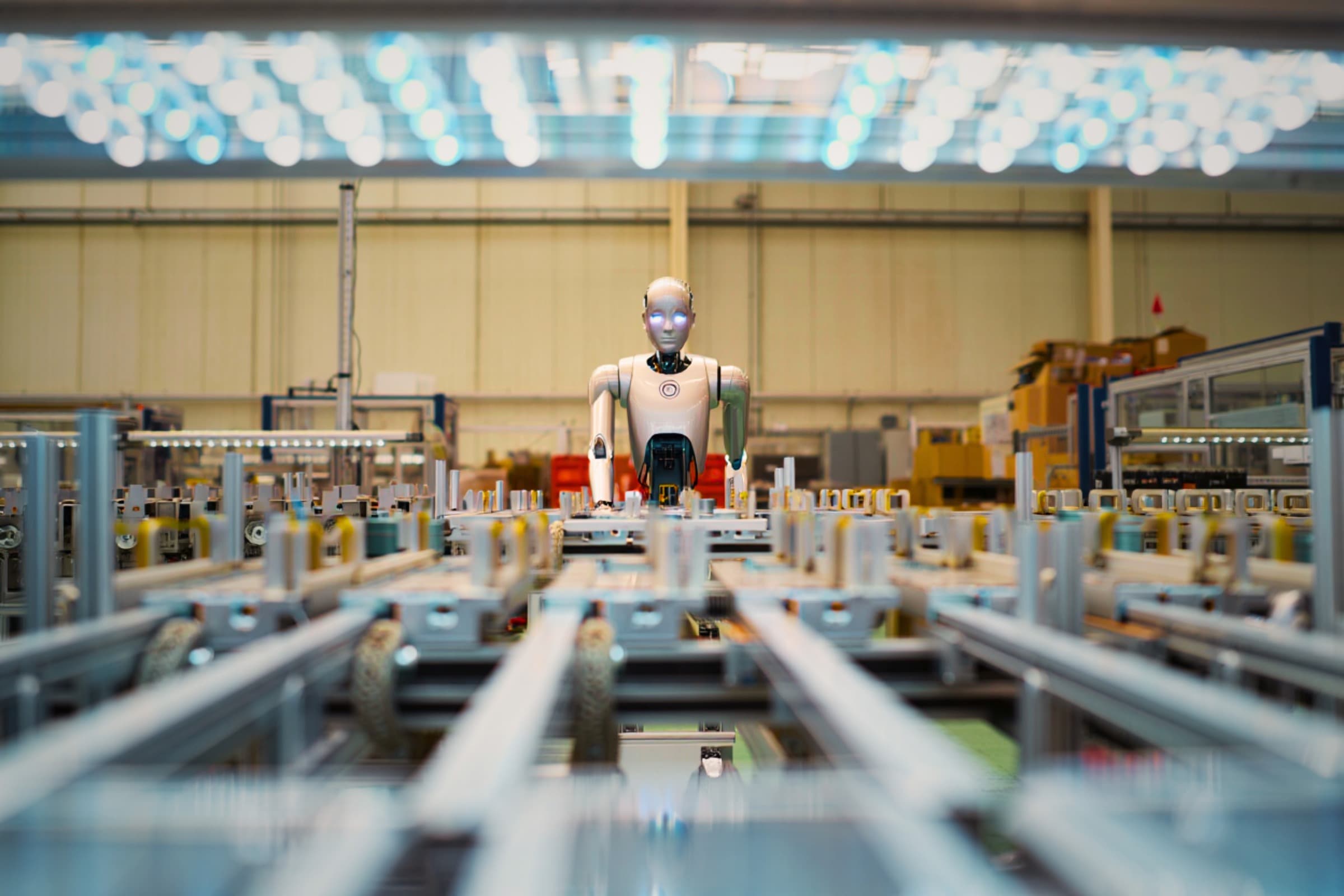
AI and robotics are transforming modern warehouses into intelligent operations with smarter workflows, real-time coordination, and scalable automation strategies.
Why Warehouses Are Entering an Intelligence Era
Over the last decade, warehouse automation has largely focused on mechanizing movement. Conveyors accelerated transport. Sortation systems improved throughput. Mobile robots began moving goods across facilities more efficiently.
These technologies dramatically improved physical productivity, but they did not fundamentally change how decisions were made inside warehouses. Supervisors still monitored congestion manually. Managers adjusted staffing based on experience. Planners reacted to problems only after they appeared.
Today a new layer is emerging: intelligence.
Artificial intelligence is beginning to work alongside robotics to coordinate operations, analyze warehouse data, and support real-time decisions. The result is not simply a more automated warehouse, but a more adaptive one.
At Robotech Pros, we often see companies begin their automation journey with robotics: mobile robots, robotic picking systems, or automated transport. As these technologies mature, the next step becomes clear: organizations need systems that can coordinate these machines and workflows intelligently.
This is where AI becomes important. When artificial intelligence is layered on top of robotics and warehouse systems, the operation begins to behave less like a collection of machines and more like a coordinated operational network.
Understanding this shift is becoming increasingly important for warehouse leaders planning the next phase of automation.
From Automated Systems to Intelligent Coordination
Traditional warehouse automation improves speed and capacity, but it does not necessarily improve decision-making.
For example, a warehouse may have conveyors, mobile robots, and advanced picking systems, yet supervisors still intervene frequently to balance workloads, reroute tasks, or resolve congestion between zones.
Artificial intelligence introduces a new capability: data-driven coordination.
Modern warehouses generate enormous volumes of operational data through:
- Warehouse management systems (WMS)
- Robotics platforms
- Scanning and tracking devices
- Inventory systems
- Operational sensors
AI systems analyze this information continuously and use it to support operational decisions such as:
- Prioritizing tasks dynamically
- Balancing workloads across workstations
- Forecasting order surges
- Optimizing robot fleet movement
- Identifying process bottlenecks
The result is a warehouse where systems respond to conditions in real time rather than waiting for manual intervention.
This shift, from automation to intelligence, is one of the defining characteristics of next-generation warehouse operations.
Large logistics operators such as Amazon and Ocado already use AI-driven systems to coordinate robotic fleets, inventory movement, and order fulfillment processes across highly automated facilities.
How AI and Robotics Work Together in Warehouse Operations
Robots excel at executing physical tasks with consistency and precision. Artificial intelligence helps determine how those robots should be used most effectively.
Together, AI and robotics create a coordinated operational system.
Intelligent Task Allocation
In many warehouses, tasks are assigned using predefined rules. AI systems can instead analyze incoming orders, inventory locations, robot availability, and workstation load to determine the most efficient task assignments.
Rather than rigid workflows, tasks are distributed dynamically across the facility.
Smarter Robot Fleet Coordination
Autonomous Mobile Robots already navigate warehouse environments independently. When AI optimization is introduced, fleets of robots can coordinate routes across the entire facility to reduce congestion and avoid traffic bottlenecks.
This improves both travel efficiency and system throughput.
Predictive Inventory Movement
AI systems can identify patterns in order demand and SKU velocity. This allows warehouses to trigger replenishment earlier and position inventory closer to demand zones before shortages occur.
Adaptive Picking Strategies
Warehouse AI platforms can adjust picking strategies based on order profiles, worker productivity patterns, and SKU movement trends. Over time, the system learns which configurations deliver the best performance.
This combination of physical automation and intelligent coordination is what transforms a robotic warehouse into an intelligent one.
Data: The Operating System of Intelligent Warehouses
Artificial intelligence depends on data, and warehouses generate more of it than ever before. Every robot movement, barcode scan, inventory update, and order transaction creates operational signals. When aggregated and analyzed, these signals reveal patterns that humans alone would struggle to detect consistently.
AI platforms use these signals to monitor operations and generate insights.
| Data Signal | AI Insight | Operational Outcome |
|---|---|---|
| Robot traffic patterns | Detect congestion zones | Adjust robot routing |
| Order arrival patterns | Forecast demand spikes | Reallocate labor and robots |
| Inventory movement | Identify high-velocity SKUs | Optimize pick placement |
| Task completion rates | Reveal workflow bottlenecks | Improve process design |
Over time, this feedback loop allows warehouses to continuously improve performance.
Instead of reacting to problems after they occur, operations can anticipate them.
Where AI Creates the Most Value in Warehouse Operations
The strongest value of AI in warehouse environments appears in areas where coordination and complexity intersect.
Robots may move goods efficiently, but when multiple systems operate simultaneously: picking stations, robot fleets, packing lines, replenishment teams, coordination becomes the limiting factor.
AI helps manage that complexity.
Three operational areas typically benefit most.
Flow Optimization
AI can analyze movement patterns across the facility and dynamically adjust routing or task sequencing to prevent congestion between zones.
Labor Productivity
When robots handle transport and AI manages task prioritization, workers spend more time performing value-added tasks rather than waiting for materials or searching for inventory.
System Utilization
Many warehouses have automation assets that sit idle during parts of the day due to workflow imbalance. AI can coordinate activities across systems to maintain more consistent utilization.
These improvements are often incremental individually, but powerful when combined across the operation.
The Evolution Toward Intelligent Warehouses
Most organizations do not transition to intelligent warehouses all at once. Automation maturity usually develops in stages.
| Stage | Operational Characteristics |
|---|---|
| Manual warehouse | Labor-driven operations with minimal automation |
| Mechanized warehouse | Conveyors and equipment increase throughput |
| Robotic warehouse | Mobile robots and robotic systems assist workflows |
| Intelligent warehouse | AI coordinates robotics, data, and decision-making |
Many warehouses today operate somewhere between the robotic and intelligent stages.
The challenge is no longer simply installing automation equipment. The challenge is ensuring these technologies operate together effectively.
Strategic Considerations for AI Adoption
While AI offers powerful capabilities, successful adoption requires careful planning.
Data Quality
AI models depend on accurate operational data. Inconsistent inventory records, incomplete tracking, or unreliable system inputs can reduce the effectiveness of AI-driven decisions.
System Integration
Robotics platforms, warehouse management systems, and analytics tools must communicate effectively. Intelligent coordination is only possible when systems share data.
Operational Transparency
Warehouse teams must understand how AI recommendations influence workflows. Clear visibility ensures managers remain confident in automated decisions.
Incremental Deployment
Many successful organizations introduce AI gradually, starting with analytics and decision-support tools before expanding into automated optimization.
This staged approach reduces risk while building organizational confidence.
How Robotech Pros Supports Intelligent Warehouse Automation
At Robotech Pros, our focus is not simply on deploying robotics technologies. Our goal is to help organizations build automation strategies that align with real operational needs.
This typically includes:
- Evaluating warehouse workflows and automation readiness
- Identifying opportunities where robotics and intelligent automation technologies can improve performance
- Integrating robotics systems with warehouse management platforms
- Supporting phased automation deployments
- Optimizing operations as systems scale
By combining robotics expertise with operational understanding, companies can move beyond isolated automation projects and build warehouses that are both efficient and intelligent.
Conclusion
The next generation of warehouse automation will not be defined by robotics alone. It will be defined by how robotics and artificial intelligence work together.
Robots provide the physical capability to move goods. AI provides the intelligence to coordinate tasks, analyze operational data, and continuously improve performance.
For warehouse leaders, the opportunity is not simply to automate individual processes but to create operations where technology, data, and human expertise operate as a unified system.
If your organization is exploring intelligent warehouse automation, contact Robotech Pros at contact@robotechpros.com to discuss how AI-driven robotics can support the next stage of your warehouse evolution.
Related resources
How Many AMRs Do You Actually Need? A Guide to Throughput Modeling
Most AMR fleet sizes are guessed before anyone counts the moves. This guide walks through the four-step throughput model that replaces the guess, and explains why doubling throughput takes more than double the robots.
Robot Charging Infrastructure: Battery Strategy, Opportunity Charging, and Floor Space Planning
Charging is usually treated as an electrical question and handed to an electrician. The harder question is how much productive floor space the dock bank consumes, and how much of the fleet sits parked when throughput pea
How Racking, Aisle Widths, and Mezzanines Limit Your Automation Options
Most automation shortlists are decided by the building, not the vendor. A practical look at how rack configuration, clear aisle width, and mezzanine design rule options in or out, and what to measure before you invite an