Automation Strategy
AMRs vs AGVs: Which Automation Strategy Is Right for Your Facility?
Jan 3, 2026 · 14 min read · Robotech Pros
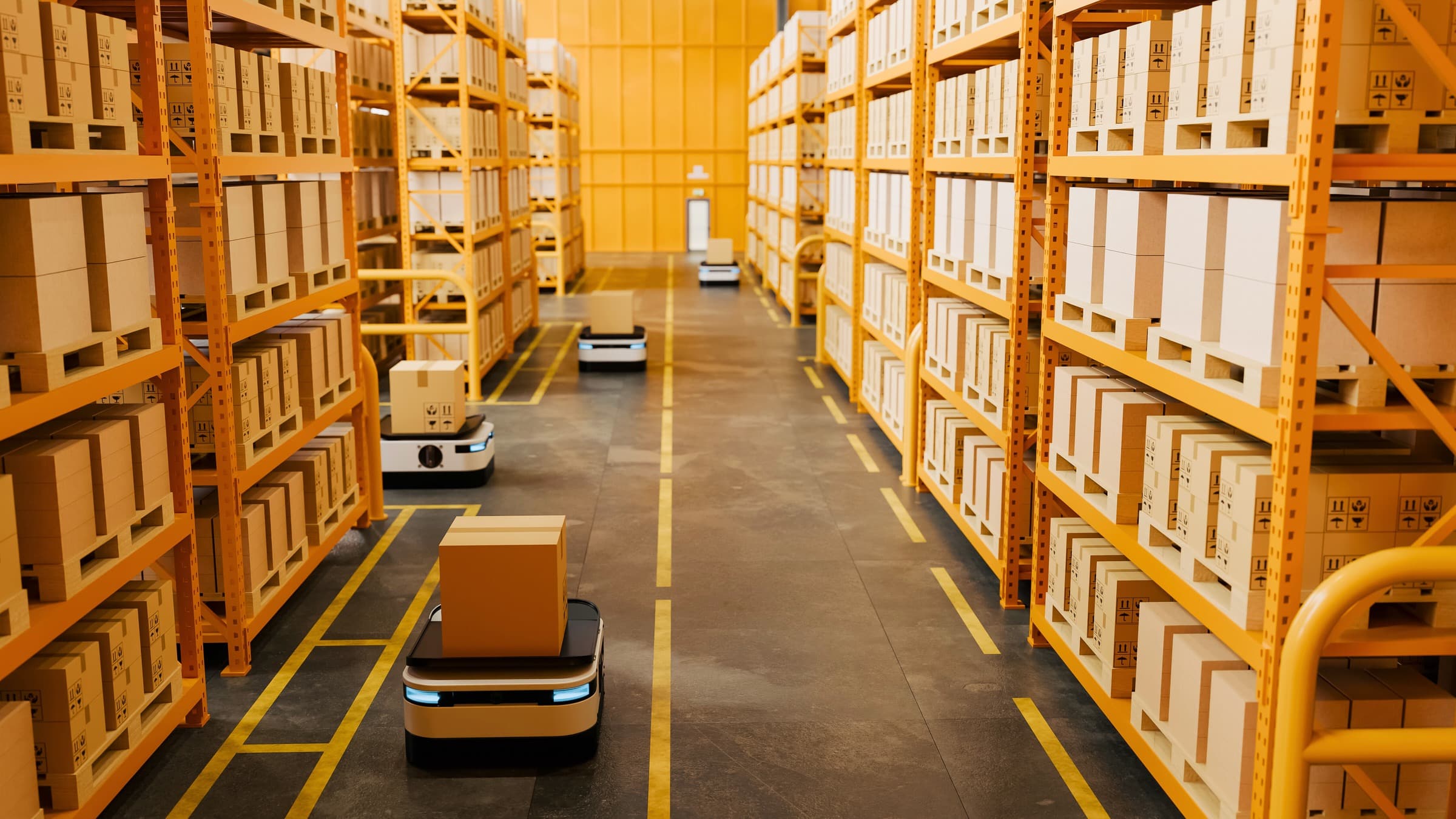
Discover how robotics helps manufacturers and warehouses overcome labor shortages, improve workflow stability, and increase operational efficiency through smart automation.
Why This Choice Matters
As more warehouses and industrial facilities look at automation, one question comes up early: should the operation use AMRs or AGVs?
At first glance, the two can seem similar. Both move materials. Both reduce manual transport. Both can improve flow. But they do not work the same way, and they do not fit the same kinds of facilities.
That is why this choice matters. The right system can improve movement, reduce strain on labor, and support long-term automation. The wrong one can add limits the operation will feel later.
This is not really a debate about which technology is better. It is a decision about fit. Some facilities run on stable, repetitive routes. Others deal with changing layouts, mixed traffic, and shifting priorities. The better choice depends on how the facility actually operates.
At Robotech Pros, this is often where the automation conversation starts. Many companies know they want to automate material movement, but they still need to decide which approach makes the most sense.
AMRs and AGVs: The Basic Difference
AMRs and AGVs solve a similar problem: moving materials without relying fully on manual transport. The difference is how they move.
AGVs follow set routes
Automated Guided Vehicles, or AGVs, usually travel along predefined paths. Depending on the system, they may follow magnetic tape, floor markers, wires, or other guidance built into the facility.
This can work very well when routes are fixed and the task rarely changes.
AMRs navigate more freely
Autonomous Mobile Robots, or AMRs, use sensors, mapping, and onboard intelligence to move through a facility more dynamically. They can detect obstacles, adjust routes, and respond to changing conditions.
This gives AMRs an advantage in environments where people, forklifts, pallets, and workflows are constantly shifting.
| System Type | How It Navigates | Best Fit |
|---|---|---|
| AGV | Follows predefined routes | Stable, repetitive workflows |
| AMR | Navigates dynamically | Changing, less predictable workflows |
In simple terms, AGVs are usually better for structured environments. AMRs are usually better for environments that need more flexibility.
When AGVs Are the Better Fit
AGVs are still a strong option in the right setting.
They often make sense when:
- Routes stay the same every day
- Transport tasks are repetitive and predictable
- The facility can support guided paths
- The goal is stable movement, not constant flexibility
- The operation wants a simpler transport model
A good example would be a facility moving the same materials between the same fixed stations every day. In that kind of environment, AGVs can do the job well without the added complexity of dynamic navigation.
AGVs are not outdated. They are simply better suited to facilities where change is limited and the workflow is highly structured.
When AMRs Usually Make More Sense
AMRs have gained attention because many warehouses and industrial sites no longer run in fixed conditions.
Storage locations change. Pick zones move. Human traffic varies throughout the day. Workflows are adjusted as demand changes. In these environments, flexibility matters. That is where AMRs usually create more value.
Because AMRs can reroute around obstacles and adapt to changing conditions, they are often a better fit when the facility needs to stay flexible. AMRs are often a strong choice when:
- Layouts may change over time
- People and machines share the same space
- The business wants to scale automation gradually
- Robots may need to be moved to different workflows later
- The operation does not want to depend on fixed guidance infrastructure
| Operational Need | Why AMRs Often Fit Better |
|---|---|
| Changing layouts | No fixed route infrastructure is required |
| Mixed traffic | Robots can detect obstacles and reroute |
| Gradual scaling | More units can usually be added more easily |
| Workflow changes | The system can adapt more easily over time |
| Flexible automation strategy | AMRs support phased deployment |
For many operators, this flexibility is the main reason to choose AMRs.
How to Decide Which One Fits Your Facility
The best choice usually comes down to a few practical questions.
1. How stable is your layout?
If your layout is fixed and likely to stay that way, AGVs may work well. If the layout changes often, AMRs usually make more sense.
2. How predictable are your routes?
If the same transport path is repeated constantly, AGVs may be enough. If movement patterns shift, AMRs often have the advantage.
3. How much flexibility will you need later?
A system that works today may become limiting if the facility grows, reorganizes, or expands automation.
4. Can the facility support guided paths?
AGVs often depend on more defined route infrastructure. AMRs reduce that requirement.
5. Are you building a fixed transport solution or a flexible automation layer?
This question often makes the choice clearer. AGVs are often a fit for structured transport. AMRs are often a fit for facilities that want mobility to evolve with the operation.
| Decision Factor | AGV Often Fits Better | AMR Often Fits Better |
|---|---|---|
| Stable routes | Yes | Sometimes |
| Changing environment | Limited | Strong |
| Minimal route changes | Strong | Strong |
| Scaling and redeployment | Moderate | Strong |
| Mixed human-robot traffic | Limited | Stronger |
| Long-term flexibility | Moderate | Strong |
What This Looks Like in Practice
In real operations, the difference shows up when conditions change.
A facility with fixed transport between the same stations may get excellent results from AGVs. A warehouse with changing pick zones, shifting storage priorities, and mixed traffic will often benefit more from AMRs.
That is why the environment should lead the decision. The question is not which robot sounds more advanced. The question is which system matches the way work actually moves through the facility.
Common Mistakes to Avoid
Companies often make a few common mistakes when comparing AMRs and AGVs. One is choosing based on trend instead of workflow fit. If AMRs are getting more attention, that does not automatically make them the right choice.
Another is underestimating process design and integration. Even the right system will struggle if the workflow is unclear or the operating rules are weak.
A third mistake is assuming flexibility is always worth the added complexity. In some facilities, a simpler guided system is exactly the better answer.
The opposite mistake also happens. A company chooses a fixed system because it seems simpler, then later finds the operation has changed enough that the design feels restrictive.
The best way to avoid these mistakes is to start with the workflow, not the technology label.
Where to Start
If your facility is comparing AMRs and AGVs, these questions are a useful starting point.
| Question | Why It Matters |
|---|---|
| How predictable are our routes? | Shows whether fixed guidance is practical |
| How often does our layout or workflow change? | Shows how valuable flexibility will be |
| Do we need to scale gradually? | Points to more adaptable options |
| Where is movement creating friction today? | Keeps the project tied to real pain points |
| What will the facility need in two to three years? | Helps avoid a short-term decision that limits future options |
For many businesses, the best first step is not choosing a robot immediately. It is identifying where movement creates the most friction and then matching the automation strategy to that need.
How Robotech Pros Can Help
Choosing between AMRs and AGVs is not only a technology decision. It is an operations decision.
Robotech Pros supports businesses with mobile robotics, custom integration, software and interface support, maintenance, training, and strategic guidance. That makes the company a strong fit for facilities that need help evaluating which automation model fits best before moving into deployment.
Robotech Pros can help businesses:
- Assess workflow and facility fit
- Identify where mobile automation will create the most value
- Choose a strategy that supports current and future needs
- Integrate systems into real workflows
- Support long-term performance through service and training
Conclusion
AMRs and AGVs are both useful automation tools. The right choice depends less on hype and more on fit.
Facilities with stable, repetitive transport needs may find AGVs highly effective. Facilities that need flexibility, gradual scaling, and the ability to adapt to change often gain more from AMRs.
The best automation strategy is the one that fits how your operation runs today and where it is likely to go next.
If your facility is evaluating mobile automation, Robotech Pros can help you determine whether AMRs or AGVs are the right fit for your operation.
Related resources
How Many AMRs Do You Actually Need? A Guide to Throughput Modeling
Most AMR fleet sizes are guessed before anyone counts the moves. This guide walks through the four-step throughput model that replaces the guess, and explains why doubling throughput takes more than double the robots.
Robot Charging Infrastructure: Battery Strategy, Opportunity Charging, and Floor Space Planning
Charging is usually treated as an electrical question and handed to an electrician. The harder question is how much productive floor space the dock bank consumes, and how much of the fleet sits parked when throughput pea
How Racking, Aisle Widths, and Mezzanines Limit Your Automation Options
Most automation shortlists are decided by the building, not the vendor. A practical look at how rack configuration, clear aisle width, and mezzanine design rule options in or out, and what to measure before you invite an