Warehouse Automation
Why Many Warehouse Automation Projects Fail Before Deployment
Nov 14, 2025 · 18 min read · Robotech Pros
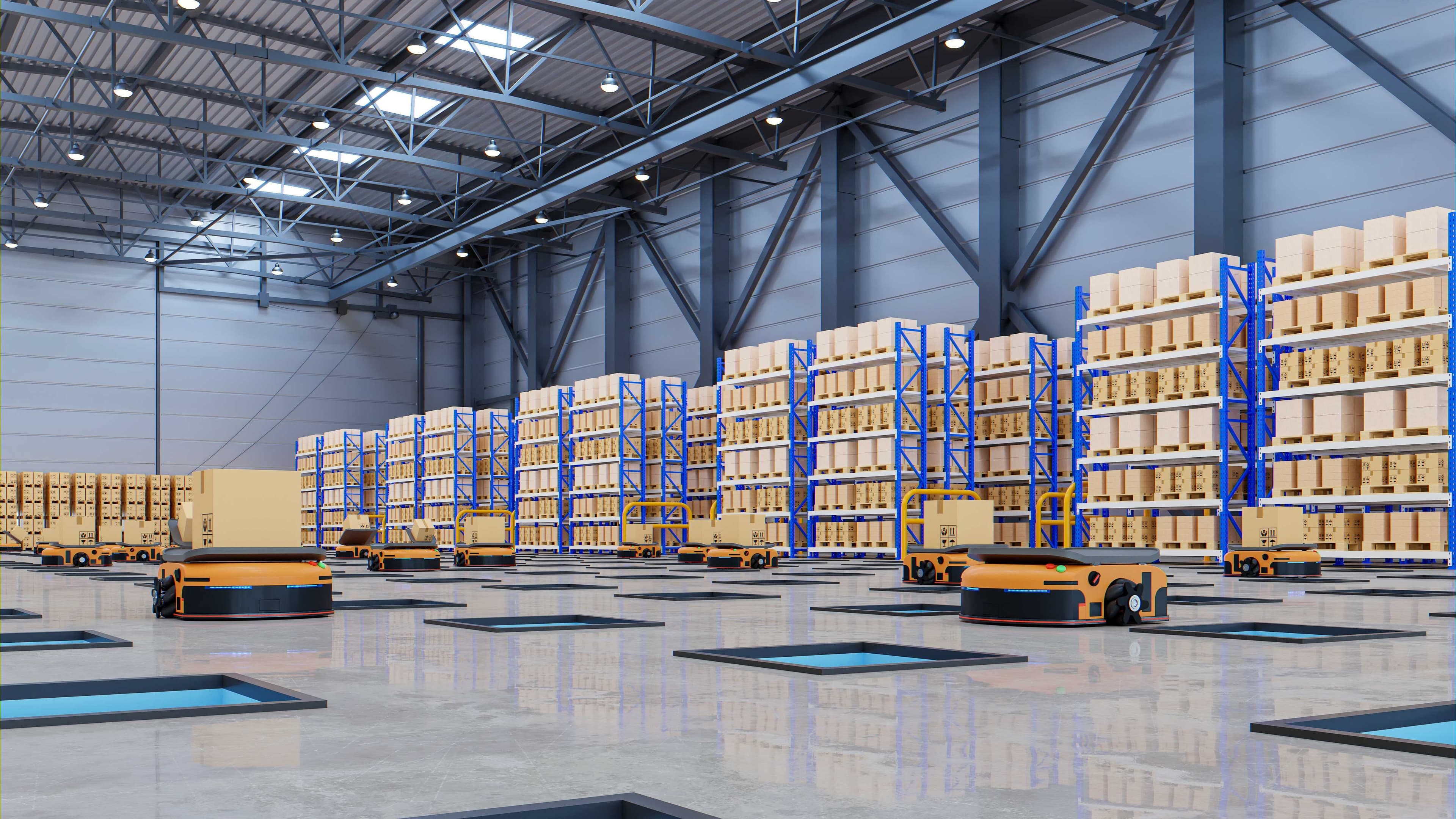
Discover why many warehouse automation projects fail before deployment and how better workflow planning, integration, and readiness can improve robotics success.
Automation Failure Often Starts Before Installation
Warehouse automation projects rarely fail because robots cannot move, conveyors cannot run, or software cannot process tasks. More often, they struggle before deployment because the operation was not ready for automation in the first place.
The technology may be capable. The business case may look attractive. The vendor demo may be convincing. But if the workflow is unclear, the data is unreliable, the facility is not prepared, or the team does not understand how daily work will change, the project can lose momentum long before the system goes live.
This matters because automation investment is increasing quickly across warehousing, logistics, and manufacturing. Companies are under pressure to improve throughput, reduce labor dependency, and handle more complex order profiles. Robotics can help, but only when it is matched to the right operational problem.
At Robotech Pros, the most important automation question is not simply: "Which robot should we buy?" The better question is:
Is the operation ready for this automation project to succeed?
That distinction matters. A successful warehouse automation project is not just a technology purchase. It is a workflow redesign, an integration project, a change management effort, and a long-term operating decision.
The Real Reason Automation Projects Struggle
Many warehouse automation projects begin with good intentions. A team wants to reduce walking, improve picking productivity, stabilize labor, speed up replenishment, or modernize a facility that has outgrown manual processes.
The problem is that these goals are often translated too quickly into equipment decisions. A company may start comparing AMRs, AGVs, conveyors, or goods-to-person solutions before fully mapping the workflow problem it is trying to solve. This creates a mismatch between the technology selected and the operational reality it must support.
A strong automation project starts with a clear use case. A weak one starts with a product category.
| Common Starting Point | Why It Creates Risk | Better Starting Point |
|---|---|---|
| "We need robots" | Technology is selected before the workflow is understood | "Where is movement limiting our performance?" |
| "We need to automate picking" | Picking problems may come from replenishment, layout, or inventory issues | "What part of the picking workflow creates the delay?" |
| "We want a fully automated warehouse" | Scope becomes too large and difficult to control | "Which single workflow should we automate first?" |
| "This vendor demo looks strong" | Demo conditions may not match the real facility | "Can this solution perform in our actual operating environment?" |
This is why many projects fail before deployment. The issue is not ambition. The issue is insufficient operational clarity before the project begins.
Seven Reasons Warehouse Automation Projects Fail Before Deployment
Failure Point 1: The Use Case Is Too Vague
A vague use case is one of the fastest ways to weaken a warehouse automation project. If the project goal is simply to "improve efficiency" or "modernize the warehouse," it becomes difficult to define success. Different stakeholders may have different expectations.
Operations may expect labor savings. Finance may expect fast payback. IT may focus on system integration. Supervisors may worry about disruption.
Without a specific use case, the project becomes difficult to design, measure, and defend. A strong use case should identify the workflow being automated, the current pain point, the measurable baseline, the expected operational improvement, the system or team affected, and the conditions required for success.
"Automate warehouse transport" is too broad. A stronger version: "Use AMRs to reduce manual tote movement between picking zones and packing stations, targeting a measurable reduction in walking time during peak periods." That version gives the project direction, makes ROI easier to calculate, and makes deployment risk easier to manage.
Failure Point 2: The Workflow Was Never Mapped Properly
Automation works best when the current workflow is understood in detail. That does not mean every process must be perfect before automation begins. But the team should know how work actually moves through the facility, not only how it is supposed to move on paper.
Many warehouses have undocumented workarounds. Workers may stage goods in unofficial areas. Supervisors may manually rebalance zones. Replenishment may depend on informal timing signals. These details matter because robots and automation systems depend on rules, triggers, routes, and reliable task logic.
If the workflow is not mapped, automation may solve the wrong problem.
| Workflow Area | What Should Be Understood Before Automation |
|---|---|
| Receiving | How goods enter, are staged, and move into storage |
| Replenishment | When inventory is moved and what triggers movement |
| Picking | How workers travel, pick, verify, and handle exceptions |
| Packing | How orders arrive, wait, and move to shipping |
| Internal transport | Which movements repeat often and create bottlenecks |
| Exceptions | How damaged goods, missing inventory, or urgent orders are handled |
This step is especially important for mobile robotics. AMRs can be flexible, but flexibility does not replace process design. Robots still need to know what tasks to perform, where to go, how to prioritize movement, and how to interact with workers, equipment, and warehouse software.
Failure Point 3: Data and System Integration Are Underestimated
Warehouse automation depends heavily on data. Robots may physically move goods, but software tells them what to move, where to go, when to act, and how to coordinate with the rest of the operation. If warehouse systems are disconnected or data is unreliable, automation performance will suffer.
Common integration issues include incomplete WMS data, inaccurate inventory locations, unclear task priorities, weak API or interface planning, poor communication between robotics platforms and warehouse systems, no clear exception-handling logic, and limited visibility into real-time performance.
Integration should be considered early, not after equipment is selected. A warehouse robotics project may involve multiple systems: WMS, ERP, WES, WCS, fleet management software, scanning systems, safety systems, and analytics dashboards. If these systems do not communicate properly, the automation layer becomes isolated hardware rather than part of the operating model.
If the automation system cannot receive accurate tasks and send useful performance data back to the operation, the project will be very difficult to scale.
Failure Point 4: Facility Readiness Is Ignored
A warehouse may look ready for robotics at a high level, but small facility details can create major deployment issues. Mobile robots, conveyors, sensors, and robotic systems all depend on physical conditions. Floor quality, aisle width, traffic patterns, charging areas, Wi-Fi coverage, staging zones, lighting, and safety markings can all influence performance.
For AMRs, facility readiness includes stable network coverage, suitable floor conditions, clear travel paths, defined robot-human interaction zones, safe charging locations, and traffic rules for forklifts, workers, and robots. For fixed automation, readiness may involve layout changes, electrical work, floor loading capacity, and downtime planning.
These details may sound tactical. But they affect deployment success. A robotics system that performs well in a demo environment may struggle if the facility is congested, poorly connected, or not physically prepared for robotic movement.
Failure Point 5: The Project Scope Is Too Large Too Soon
Many warehouse automation projects fail because they try to solve too much at once. A company may want to automate picking, replenishment, packing, sortation, shipping, and internal transport in one major initiative. That ambition is understandable, but large automation projects introduce more complexity, more integration risk, and more disruption.
A phased approach is often safer. Start with one workflow where the problem is clear and the value is measurable. Prove the concept. Learn from the deployment. Then expand.
| Project Approach | Risk Level | Best Fit |
|---|---|---|
| Full-site transformation from the start | High | Mature operations with strong internal automation capability |
| Focused pilot with a measurable workflow | Lower | Businesses new to robotics or testing AMRs for the first time |
| Phased automation roadmap | Balanced | Growing warehouses that want scalable, controlled deployment |
For many mid-sized and growing operations, the best first automation project is not the biggest one. It is the one that proves value with the least unnecessary complexity.
Failure Point 6: People and Change Management Are Treated as Secondary
Warehouse automation changes how people work. Even when robots are introduced to support employees rather than replace them, daily routines still change. Workers may need to interact with robots, follow new traffic rules, handle exceptions differently, use new interfaces, or trust a new task assignment system.
If people are not prepared, resistance can appear quickly. This does not always look like open rejection. It may show up as workarounds, inconsistent adoption, supervisors reverting to old processes under pressure, or confusion that slows go-live performance.
Successful projects include early communication with warehouse teams, supervisor involvement in workflow design, clear training for operators and maintenance staff, practical safety education, and defined support procedures during the first weeks after go-live. Automation is easier to adopt when employees understand what is changing, why it matters, and how the system supports the operation.
Failure Point 7: ROI Assumptions Are Too Optimistic
Some automation projects fail before deployment because the financial case was built on assumptions that do not survive detailed planning. Teams may underestimate integration costs, training needs, facility preparation, support requirements, or deployment time. They may also overestimate productivity gains before the workflow has been tested in real conditions.
| ROI Assumption | Common Mistake | Better Approach |
|---|---|---|
| Labor savings | Assuming automation immediately removes labor cost | Measure labor capacity gain and redeployment value |
| Throughput gain | Assuming demo performance equals live performance | Validate performance in real workflow conditions first |
| Integration cost | Treating software connections as simple or fast | Assess WMS, API, and task logic requirements early |
| Deployment timeline | Assuming installation equals adoption | Include training, testing, and stabilization in the plan |
| Scale-up value | Assuming pilot success automatically scales | Define expansion criteria and performance thresholds |
The goal is not to make the business case pessimistic. The goal is to make it durable. A realistic ROI model helps prevent disappointment and builds trust between operations, finance, IT, and implementation partners.
How to Reduce Deployment Risk Before Investing
The best way to prevent automation failure is to treat planning as part of deployment, not a separate preliminary step. Before choosing a robotics solution, warehouse teams should ask: What workflow are we trying to improve? What is the measurable baseline today? What would success look like after deployment? What systems must connect to the automation layer? Is the facility physically and digitally ready? How will workers and supervisors interact with the system?
A strong pre-deployment process covers four areas.
| Readiness Area | Key Question | Why It Matters |
|---|---|---|
| Workflow readiness | Is the use case specific and measurable? | Vague goals lead to misaligned systems and missed ROI targets |
| System readiness | Can robotics connect to warehouse software and task logic? | Poor integration creates isolated hardware rather than operational value |
| Facility readiness | Can the physical environment support reliable robot operation? | Infrastructure gaps discovered late delay go-live and add unplanned cost |
| Team readiness | Are supervisors, workers, and support teams prepared? | Unprepared teams underuse or work around automation, reducing performance |
When all four areas are addressed before deployment begins, automation becomes less of a leap and more of a controlled operational improvement. ## When Robotics Is Not the Right First Step
One reason to talk honestly about automation failure is this: robotics is not always the right first step.
Some warehouses need process cleanup before automation. Others need better inventory discipline, clearer replenishment rules, stronger WMS usage, improved layout design, or better labor planning. Robotics may not be the best first investment when:
- The workflow problem is unclear or contested internally
- Order volume is too low to justify the investment
- Inventory data is unreliable or frequently inaccurate
- Exception handling is mostly manual and undocumented
- The facility layout changes constantly without controlled planning
- Leadership expects fast ROI without process change
- The team is not ready to support a new operating model
This does not mean automation is off the table. It means the organization may need to prepare the process first. In many cases, the right pre-automation work makes a future robotics deployment significantly stronger, faster, and easier to scale.
How Robotech Pros Can Help
Warehouse automation projects succeed when technology, workflow, software, facility conditions, and people are aligned before deployment begins. Robotech Pros helps businesses evaluate automation opportunities with practical implementation in mind. The goal is not only to identify which robotics solution looks promising, but to understand whether the operation is ready to use it effectively.
Support may include workflow and bottleneck assessment, automation readiness review, mobile robotics opportunity mapping, AMR and goods-to-person strategy planning, integration planning with warehouse systems, pilot deployment support, training, maintenance, and technical service, and phased automation roadmap development.
For many warehouses, the most valuable first step is not selecting equipment. It is reducing the risk of choosing the wrong solution for the wrong workflow.
Final Thought: Preparation Is the Most Important Deployment Decision
Warehouse automation ROI should not be reduced to a single payback formula. The real value of robotics depends on how automation changes the way work moves through the facility. Labor savings matter. So do throughput, accuracy, safety, scalability, and operational consistency.
The strongest automation investments usually start with a clear workflow problem, a measurable baseline, and a realistic view of total cost. From there, companies can determine whether robotics is likely to create meaningful return and how quickly the investment can scale.
If your team is evaluating warehouse automation or robotics ROI,Robotech Pros can help assess your workflows and identify where automation can create the greatest measurable impact.
The most valuable first step is often not choosing a robot. It is reducing the risk of choosing the wrong solution for the wrong workflow.
Related resources

Warehouse Automation KPIs: What to Measure Once the Robots Are Running
A deployed fleet produces a great deal of data and surprisingly little information. These are the metrics that tell you whether the robots are healthy, doing the right work, and paying for themselves.
When Not to Automate: Five Operations Where Robotics Is the Wrong Answer
Most automation content explains when to start. This one explains when to stop: five operating profiles where mobile robotics disappoints, with a measurement you can run before anyone quotes a fleet.

How Many AMRs Do You Actually Need? A Guide to Throughput Modeling
Most AMR fleet sizes are guessed before anyone counts the moves. This guide walks through the four-step throughput model that replaces the guess, and explains why doubling throughput takes more than double the robots.